Esteban Vicente
Esteban Vicente was born on January 20, 1903, in Turégano, in the province of Segovia, Spain. His father, an officer in the Civil Guard and an amateur painter, moved the family to Madrid and took his son to visit the Prado. Vicente enrolled at the Escuela de Bellas Artes de San Fernando in Madrid, where he studied sculpture for three years before turning to painting. In Madrid, he moved among the writers and artists of the Generation of 1927, including Federico García Lorca, Rafael Alberti, and Luis Buñuel, and his first drawings appeared in literary reviews.
In 1928, Vicente held his first exhibition, at the Ateneo de Madrid, and moved to Paris. There he shared a studio with the painter Pedro Flores, met Pablo Picasso, and exhibited at the Salon des Surindépendants. In 1930, he moved to Barcelona, where he exhibited at the Galeries Syra and Galeria Dalmau. In 1932, a scholarship from the Junta para Ampliación de Estudios returned him to Paris, where he met Estelle Charney. They married in Barcelona in 1935 and spent several months on Ibiza.
Vicente was in Madrid when the Spanish Civil War broke out in July 1936, and soon afterward he and his wife settled in New York’s Greenwich Village. From 1937 to 1939, he served as Vice-Consul of the Spanish Republic in Philadelphia, and he exhibited at the Kleemann Galleries in New York in 1937 and 1939. He became a naturalized citizen of the United States in 1942. He exhibited at the University of Puerto Rico in 1945 and 1946, and in 1948 he married the Puerto Rican poet and professor María Teresa Babín. In the summer of 1949, while teaching at the University of California, Berkeley, he made his first collage.
In 1950, Vicente established a studio at 88 East 10th Street in New York. His painting In Pink and Grey was selected for Talent 1950 at the Kootz Gallery, and he was included in the Whitney Museum of American Art’s Annual. In 1951, he helped organize and exhibited in the Ninth Street Show. Through the 1950s and 1960s, he exhibited with the Peridot, Rose Fried, Leo Castelli, Stable, Charles Egan, and André Emmerich galleries in New York. He also held solo exhibitions at the Allan Frumkin Gallery in Chicago and the California Palace of the Legion of Honor in San Francisco in 1953. In 1961, he married Harriet Godfrey Peters, and in 1964 they bought a property in Bridgehampton, New York, where he converted a barn into a second studio. In 1969, his work was included in The New American Painting and Sculpture: The First Generation at the Museum of Modern Art.
Vicente taught widely for more than four decades. His posts included Black Mountain College, New York University, Princeton University, Yale University, and the University of California at both Berkeley and Los Angeles. In 1964, he was a founding member of the New York Studio School of Drawing, Painting and Sculpture, where he taught for many years. He was elected an Associate of the National Academy of Design in 1980 and a full Academician in 1985. In 1993, he was elected to the American Academy of Arts and Letters and received the Lifetime Achievement in the Arts Award from Guild Hall in East Hampton.
Spain honored Vicente in his later years. In 1991, he received the Gold Medal for Fine Arts from King Juan Carlos. In 1998, the Museo Nacional Centro de Arte Reina Sofía in Madrid presented a major retrospective of his work, and the Museo de Arte Contemporáneo Esteban Vicente opened in Segovia under the auspices of the provincial government, with a permanent collection donated by the artist and his wife. In 1999, he received the Grand Cross of the Civil Order of Alfonso X the Wise.
Esteban Vicente died at his home in Bridgehampton on January 10, 2001, at the age of 97. His ashes rest beside Harriet’s in the garden of the museum in Segovia. The Harriet and Esteban Vicente Foundation, endowed by Harriet’s estate in 2007, supports scholarship on his work, including a catalogue raisonné. His work can be found in prestigious private and institutional collections worldwide. These include the Metropolitan Museum of Art, Museum of Modern Art (MoMA), Solomon R. Guggenheim Museum, Whitney Museum of American Art, Art Institute of Chicago, Hirshhorn Museum and Sculpture Garden, Los Angeles County Museum of Art, San Francisco Museum of Modern Art, Museo Nacional Centro de Arte Reina Sofía, and Museo de Arte Contemporáneo Esteban Vicente.
Sources: Harriet & Esteban Vicente Foundation and Museo de Arte Contemporáneo Esteban Vicente
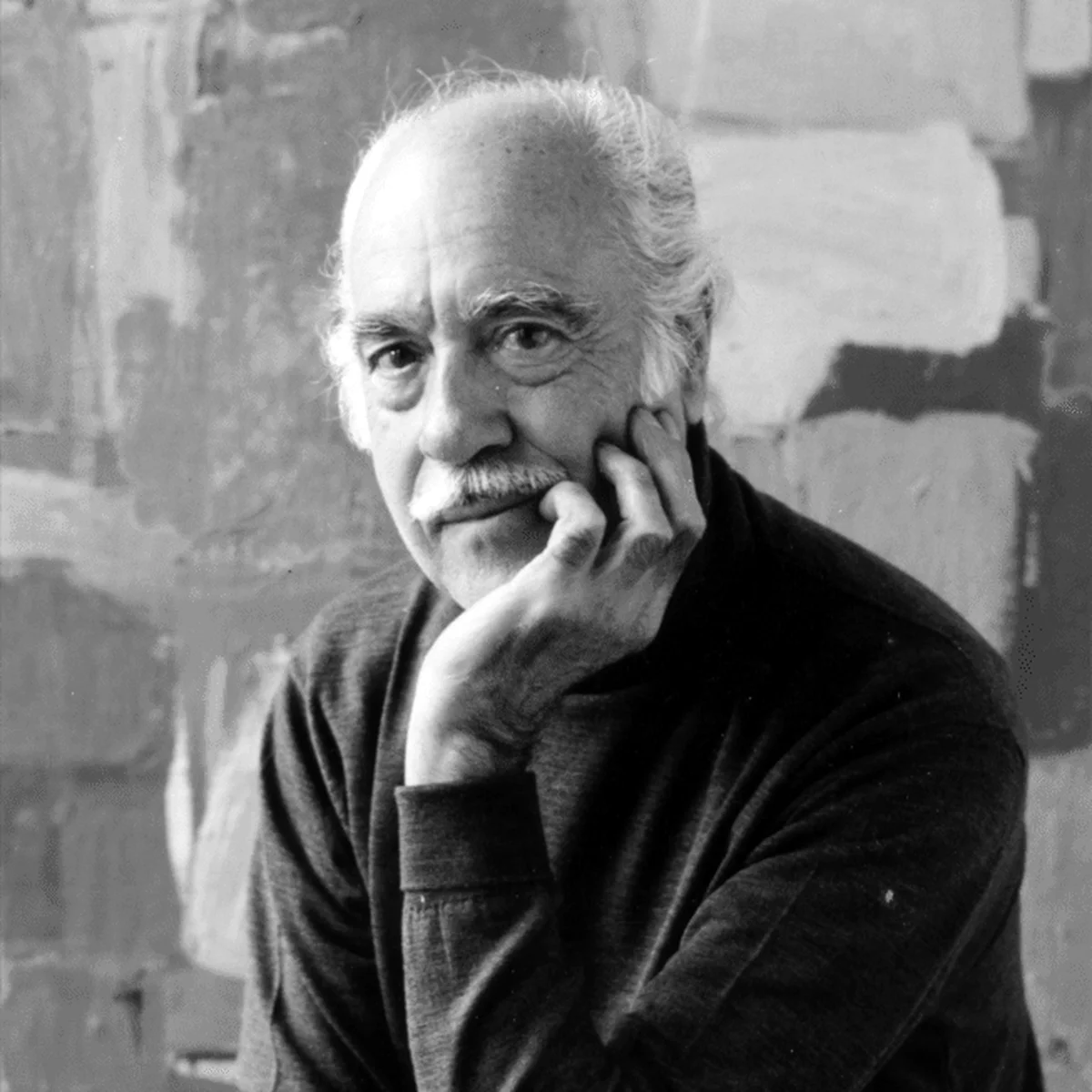
Esteban Vicente was born on January 20, 1903, in Turégano, in the province of Segovia, Spain. His father, an officer in the Civil Guard and an amateur painter, moved the family to Madrid and took his son to visit the Prado. Vicente enrolled at the Escuela de Bellas Artes de San Fernando in Madrid, where he studied sculpture for three years before turning to painting. In Madrid, he moved among the writers and artists of the Generation of 1927, including Federico García Lorca, Rafael Alberti, and Luis Buñuel, and his first drawings appeared in literary reviews.
In 1928, Vicente held his first exhibition, at the Ateneo de Madrid, and moved to Paris. There he shared a studio with the painter Pedro Flores, met Pablo Picasso, and exhibited at the Salon des Surindépendants. In 1930, he moved to Barcelona, where he exhibited at the Galeries Syra and Galeria Dalmau. In 1932, a scholarship from the Junta para Ampliación de Estudios returned him to Paris, where he met Estelle Charney. They married in Barcelona in 1935 and spent several months on Ibiza.
Vicente was in Madrid when the Spanish Civil War broke out in July 1936, and soon afterward he and his wife settled in New York’s Greenwich Village. From 1937 to 1939, he served as Vice-Consul of the Spanish Republic in Philadelphia, and he exhibited at the Kleemann Galleries in New York in 1937 and 1939. He became a naturalized citizen of the United States in 1942. He exhibited at the University of Puerto Rico in 1945 and 1946, and in 1948 he married the Puerto Rican poet and professor María Teresa Babín. In the summer of 1949, while teaching at the University of California, Berkeley, he made his first collage.
In 1950, Vicente established a studio at 88 East 10th Street in New York. His painting In Pink and Grey was selected for Talent 1950 at the Kootz Gallery, and he was included in the Whitney Museum of American Art’s Annual. In 1951, he helped organize and exhibited in the Ninth Street Show. Through the 1950s and 1960s, he exhibited with the Peridot, Rose Fried, Leo Castelli, Stable, Charles Egan, and André Emmerich galleries in New York. He also held solo exhibitions at the Allan Frumkin Gallery in Chicago and the California Palace of the Legion of Honor in San Francisco in 1953. In 1961, he married Harriet Godfrey Peters, and in 1964 they bought a property in Bridgehampton, New York, where he converted a barn into a second studio. In 1969, his work was included in The New American Painting and Sculpture: The First Generation at the Museum of Modern Art.
Vicente taught widely for more than four decades. His posts included Black Mountain College, New York University, Princeton University, Yale University, and the University of California at both Berkeley and Los Angeles. In 1964, he was a founding member of the New York Studio School of Drawing, Painting and Sculpture, where he taught for many years. He was elected an Associate of the National Academy of Design in 1980 and a full Academician in 1985. In 1993, he was elected to the American Academy of Arts and Letters and received the Lifetime Achievement in the Arts Award from Guild Hall in East Hampton.
Spain honored Vicente in his later years. In 1991, he received the Gold Medal for Fine Arts from King Juan Carlos. In 1998, the Museo Nacional Centro de Arte Reina Sofía in Madrid presented a major retrospective of his work, and the Museo de Arte Contemporáneo Esteban Vicente opened in Segovia under the auspices of the provincial government, with a permanent collection donated by the artist and his wife. In 1999, he received the Grand Cross of the Civil Order of Alfonso X the Wise.
Esteban Vicente died at his home in Bridgehampton on January 10, 2001, at the age of 97. His ashes rest beside Harriet’s in the garden of the museum in Segovia. The Harriet and Esteban Vicente Foundation, endowed by Harriet’s estate in 2007, supports scholarship on his work, including a catalogue raisonné. His work can be found in prestigious private and institutional collections worldwide. These include the Metropolitan Museum of Art, Museum of Modern Art (MoMA), Solomon R. Guggenheim Museum, Whitney Museum of American Art, Art Institute of Chicago, Hirshhorn Museum and Sculpture Garden, Los Angeles County Museum of Art, San Francisco Museum of Modern Art, Museo Nacional Centro de Arte Reina Sofía, and Museo de Arte Contemporáneo Esteban Vicente.
Sources: Harriet & Esteban Vicente Foundation and Museo de Arte Contemporáneo Esteban Vicente