James Brooks
James Brooks was born in St. Louis, Missouri, on October 18, 1906. He spent his childhood in Colorado, Oklahoma, Illinois, and Texas, and his family settled in Dallas in 1916. He attended Southern Methodist University and the Dallas Art Institute before moving to New York in 1926. There he supported himself as a commercial letterer while taking night classes at the Art Students League from 1927 to 1930 under Kimon Nicolaides and Boardman Robinson.
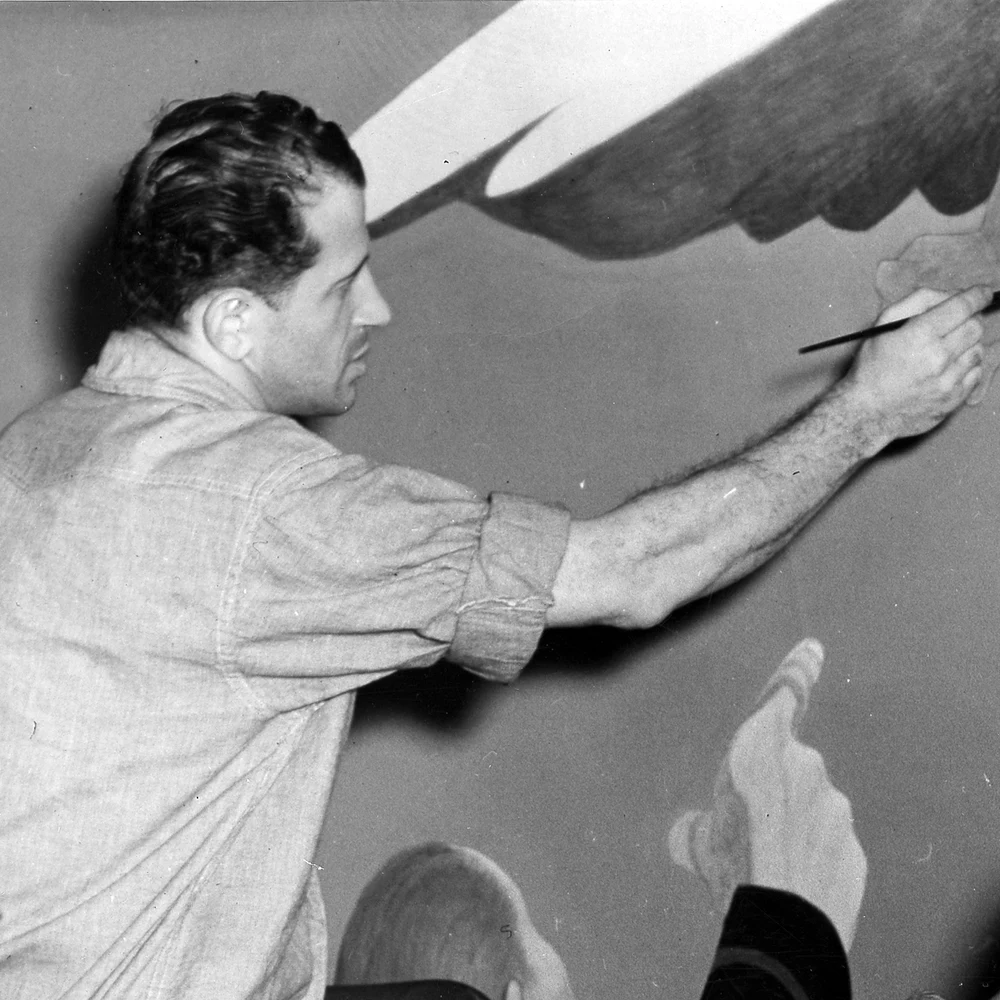
From 1936 to 1942, Brooks worked for the Federal Art Project of the Works Progress Administration, painting murals for the Little Falls, New Jersey, Post Office and the Woodside Library in Queens. His largest commission, Flight, is a 235-foot mural encircling the rotunda of the Marine Air Terminal at LaGuardia Airport. It was painted over in the 1950s and restored in 1980. During the Second World War, he served in the U.S. Army as an art correspondent based in Cairo and traveled through North Africa, Palestine, and Egypt. He returned to New York in 1945 and in 1947 married the painter Charlotte Park, whom he had met in Washington, D.C., during the war.
In the late 1940s, Brooks turned to abstraction, and he held his first solo exhibition of abstract paintings at the Peridot Gallery in New York in 1950. In 1951, he helped organize the Ninth Street Show. He and Park settled on the East End of Long Island, eventually making their home in Springs, East Hampton. He won fifth prize at the Pittsburgh International in 1952. In 1956, he was included in Twelve Americans at the Museum of Modern Art, and in 1957 he received the Logan Medal and First Painting Prize from the Art Institute of Chicago. In 1958 and 1959, he was included in MoMA’s The New American Painting, which toured Europe, and in 1959 he participated in Documenta II in Kassel, Germany. In 1961, he received the Art Institute of Chicago’s Norman Wait Harris Silver Medal.
Brooks taught widely. His posts included Columbia University, Pratt Institute from 1948 to 1955, Yale University from 1955 to 1960, New College in Sarasota, Florida, Queens College from 1966 to 1969, the University of Pennsylvania from 1971 to 1972, and Cooper Union, where he was the Andrew Carnegie Visiting Professor in 1975. He was artist-in-residence at the American Academy in Rome in 1963.
In 1963, the Whitney Museum of American Art organized a traveling retrospective of his work. Further retrospectives followed at the Dallas Museum of Fine Arts in 1972, the Martha Jackson Gallery in 1975, and the Portland Museum of Art in 1983. He received a Guggenheim Fellowship in 1969. In 1973, he was elected to the American Academy and Institute of Arts and Letters and received a grant from the National Endowment for the Arts. In 1980, he was elected to the National Academy of Design, and in 1985 he received the Gold Medal of the National Arts Club.
James Brooks died on March 9, 1992, at the age of 85. His work can be found in prestigious private and institutional collections worldwide. These include the Metropolitan Museum of Art, Museum of Modern Art (MoMA), Solomon R. Guggenheim Museum, Whitney Museum of American Art, Art Institute of Chicago, Brooklyn Museum, Hirshhorn Museum and Sculpture Garden, Smithsonian American Art Museum, Dallas Museum of Art, Walker Art Center, Parrish Art Museum, and Tate in London. Since his death, his work has been the subject of exhibitions at the Brooklyn Museum in 1997 and the Parrish Art Museum in 2016 and 2023.
Sources: Archives of American Art, Smithsonian Institution, and Van Doren Waxter
James Brooks was born in St. Louis, Missouri, on October 18, 1906. He spent his childhood in Colorado, Oklahoma, Illinois, and Texas, and his family settled in Dallas in 1916. He attended Southern Methodist University and the Dallas Art Institute before moving to New York in 1926. There he supported himself as a commercial letterer while taking night classes at the Art Students League from 1927 to 1930 under Kimon Nicolaides and Boardman Robinson.
From 1936 to 1942, Brooks worked for the Federal Art Project of the Works Progress Administration, painting murals for the Little Falls, New Jersey, Post Office and the Woodside Library in Queens. His largest commission, Flight, is a 235-foot mural encircling the rotunda of the Marine Air Terminal at LaGuardia Airport. It was painted over in the 1950s and restored in 1980. During the Second World War, he served in the U.S. Army as an art correspondent based in Cairo and traveled through North Africa, Palestine, and Egypt. He returned to New York in 1945 and in 1947 married the painter Charlotte Park, whom he had met in Washington, D.C., during the war.
In the late 1940s, Brooks turned to abstraction, and he held his first solo exhibition of abstract paintings at the Peridot Gallery in New York in 1950. In 1951, he helped organize the Ninth Street Show. He and Park settled on the East End of Long Island, eventually making their home in Springs, East Hampton. He won fifth prize at the Pittsburgh International in 1952. In 1956, he was included in Twelve Americans at the Museum of Modern Art, and in 1957 he received the Logan Medal and First Painting Prize from the Art Institute of Chicago. In 1958 and 1959, he was included in MoMA’s The New American Painting, which toured Europe, and in 1959 he participated in Documenta II in Kassel, Germany. In 1961, he received the Art Institute of Chicago’s Norman Wait Harris Silver Medal.
Brooks taught widely. His posts included Columbia University, Pratt Institute from 1948 to 1955, Yale University from 1955 to 1960, New College in Sarasota, Florida, Queens College from 1966 to 1969, the University of Pennsylvania from 1971 to 1972, and Cooper Union, where he was the Andrew Carnegie Visiting Professor in 1975. He was artist-in-residence at the American Academy in Rome in 1963.
In 1963, the Whitney Museum of American Art organized a traveling retrospective of his work. Further retrospectives followed at the Dallas Museum of Fine Arts in 1972, the Martha Jackson Gallery in 1975, and the Portland Museum of Art in 1983. He received a Guggenheim Fellowship in 1969. In 1973, he was elected to the American Academy and Institute of Arts and Letters and received a grant from the National Endowment for the Arts. In 1980, he was elected to the National Academy of Design, and in 1985 he received the Gold Medal of the National Arts Club.
James Brooks died on March 9, 1992, at the age of 85. His work can be found in prestigious private and institutional collections worldwide. These include the Metropolitan Museum of Art, Museum of Modern Art (MoMA), Solomon R. Guggenheim Museum, Whitney Museum of American Art, Art Institute of Chicago, Brooklyn Museum, Hirshhorn Museum and Sculpture Garden, Smithsonian American Art Museum, Dallas Museum of Art, Walker Art Center, Parrish Art Museum, and Tate in London. Since his death, his work has been the subject of exhibitions at the Brooklyn Museum in 1997 and the Parrish Art Museum in 2016 and 2023.
Sources: Archives of American Art, Smithsonian Institution, and Van Doren Waxter