Paul Burlin
Paul Burlin was born in New York City on September 10, 1886, and grew up in New York and London. From 1900 to 1912, he studied part-time at the National Academy of Design and the Art Students League. He traveled in Europe in 1908–1909 and made his first visit to the American Southwest in 1910. On the strength of paintings he made in Santa Fe in 1911, he was invited to exhibit in the 1913 Armory Show in New York, where he was among the youngest artists included.
In 1913, Burlin moved to Santa Fe, New Mexico, where he painted until 1920 while continuing to exhibit in New York. His work of these years included landscapes, portraits, and scenes of daily life in the Pueblo communities. In 1914, he met the ethnomusicologist Natalie Curtis, who was documenting Native American music, and they married in 1917. His work was shown at the Pennsylvania Academy of the Fine Arts in 1919.
In 1921, Burlin and Curtis moved to Paris, where Curtis was killed in a traffic accident later that year. Burlin remained in France for more than a decade, exhibiting in both Paris and New York. In 1930, his work was included in the Museum of Modern Art’s Painting and Sculpture by Living Americans. He returned to the United States in 1932 and settled in New York, where he lived for the rest of his life, spending many summers in Provincetown, Massachusetts. He worked on the Federal Art Project, and in 1936 he signed the call for the American Artists’ Congress. In 1947, he married Margaret Timmerman, with whom he remained for the rest of his life.
In the postwar years, Burlin’s painting moved fully into abstraction. He served as an artist-in-residence at universities across the country, including the University of Minnesota, Washington University in St. Louis, the University of Colorado Boulder, the University of Wyoming, the University of Southern California, Union College, and the University of Texas at Austin. He was represented in New York by the Grace Borgenicht Gallery. In 1959, he shared first prize at Art USA: 59 in New York, and in 1962 he received first prize from the Pennsylvania Academy of the Fine Arts. From 1962 to 1963, the American Federation of Arts organized a retrospective of his work curated by Irving Sandler, which traveled to museums including the Whitney Museum of American Art. From the 1950s, he suffered a serious loss of sight and underwent a series of cornea implants over the following decade.
Paul Burlin died in New York City on March 13, 1969, at the age of 82. His work can be found in institutional collections including the Smithsonian American Art Museum, the New Mexico Museum of Art, the Harwood Museum of Art in Taos, and the Provincetown Art Association and Museum. The Archives of American Art at the Smithsonian Institution holds his papers.
Sources: Smithsonian American Art Museum and Wikipedia
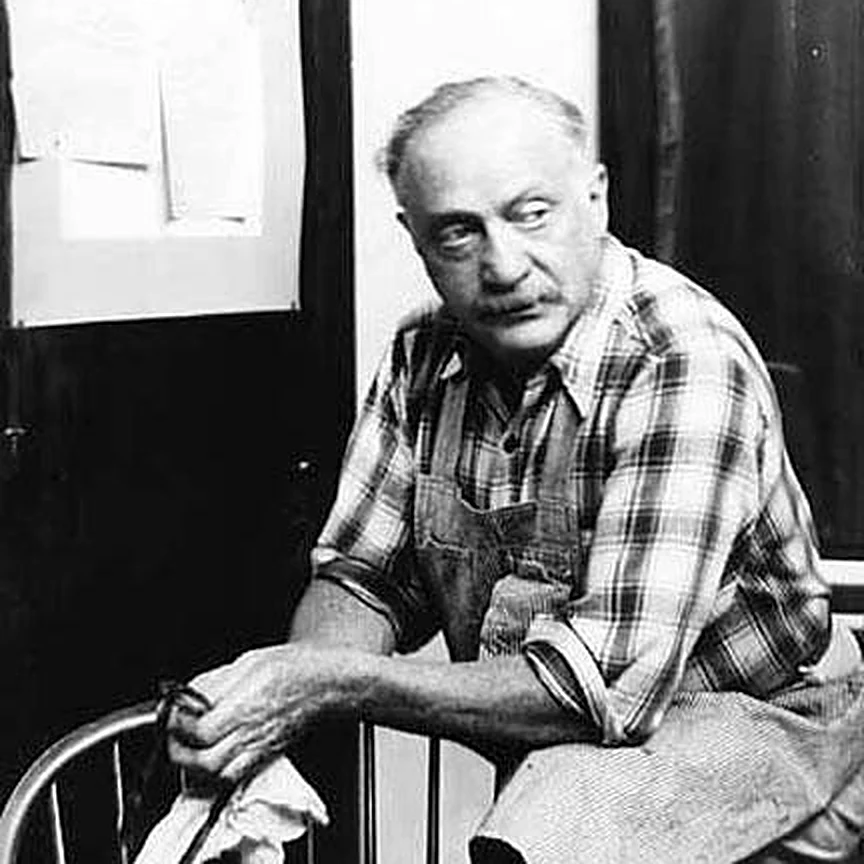
Paul Burlin was born in New York City on September 10, 1886, and grew up in New York and London. From 1900 to 1912, he studied part-time at the National Academy of Design and the Art Students League. He traveled in Europe in 1908–1909 and made his first visit to the American Southwest in 1910. On the strength of paintings he made in Santa Fe in 1911, he was invited to exhibit in the 1913 Armory Show in New York, where he was among the youngest artists included.
In 1913, Burlin moved to Santa Fe, New Mexico, where he painted until 1920 while continuing to exhibit in New York. His work of these years included landscapes, portraits, and scenes of daily life in the Pueblo communities. In 1914, he met the ethnomusicologist Natalie Curtis, who was documenting Native American music, and they married in 1917. His work was shown at the Pennsylvania Academy of the Fine Arts in 1919.
In 1921, Burlin and Curtis moved to Paris, where Curtis was killed in a traffic accident later that year. Burlin remained in France for more than a decade, exhibiting in both Paris and New York. In 1930, his work was included in the Museum of Modern Art’s Painting and Sculpture by Living Americans. He returned to the United States in 1932 and settled in New York, where he lived for the rest of his life, spending many summers in Provincetown, Massachusetts. He worked on the Federal Art Project, and in 1936 he signed the call for the American Artists’ Congress. In 1947, he married Margaret Timmerman, with whom he remained for the rest of his life.
In the postwar years, Burlin’s painting moved fully into abstraction. He served as an artist-in-residence at universities across the country, including the University of Minnesota, Washington University in St. Louis, the University of Colorado Boulder, the University of Wyoming, the University of Southern California, Union College, and the University of Texas at Austin. He was represented in New York by the Grace Borgenicht Gallery. In 1959, he shared first prize at Art USA: 59 in New York, and in 1962 he received first prize from the Pennsylvania Academy of the Fine Arts. From 1962 to 1963, the American Federation of Arts organized a retrospective of his work curated by Irving Sandler, which traveled to museums including the Whitney Museum of American Art. From the 1950s, he suffered a serious loss of sight and underwent a series of cornea implants over the following decade.
Paul Burlin died in New York City on March 13, 1969, at the age of 82. His work can be found in institutional collections including the Smithsonian American Art Museum, the New Mexico Museum of Art, the Harwood Museum of Art in Taos, and the Provincetown Art Association and Museum. The Archives of American Art at the Smithsonian Institution holds his papers.
Sources: Smithsonian American Art Museum and Wikipedia