Richard Anuszkiewicz
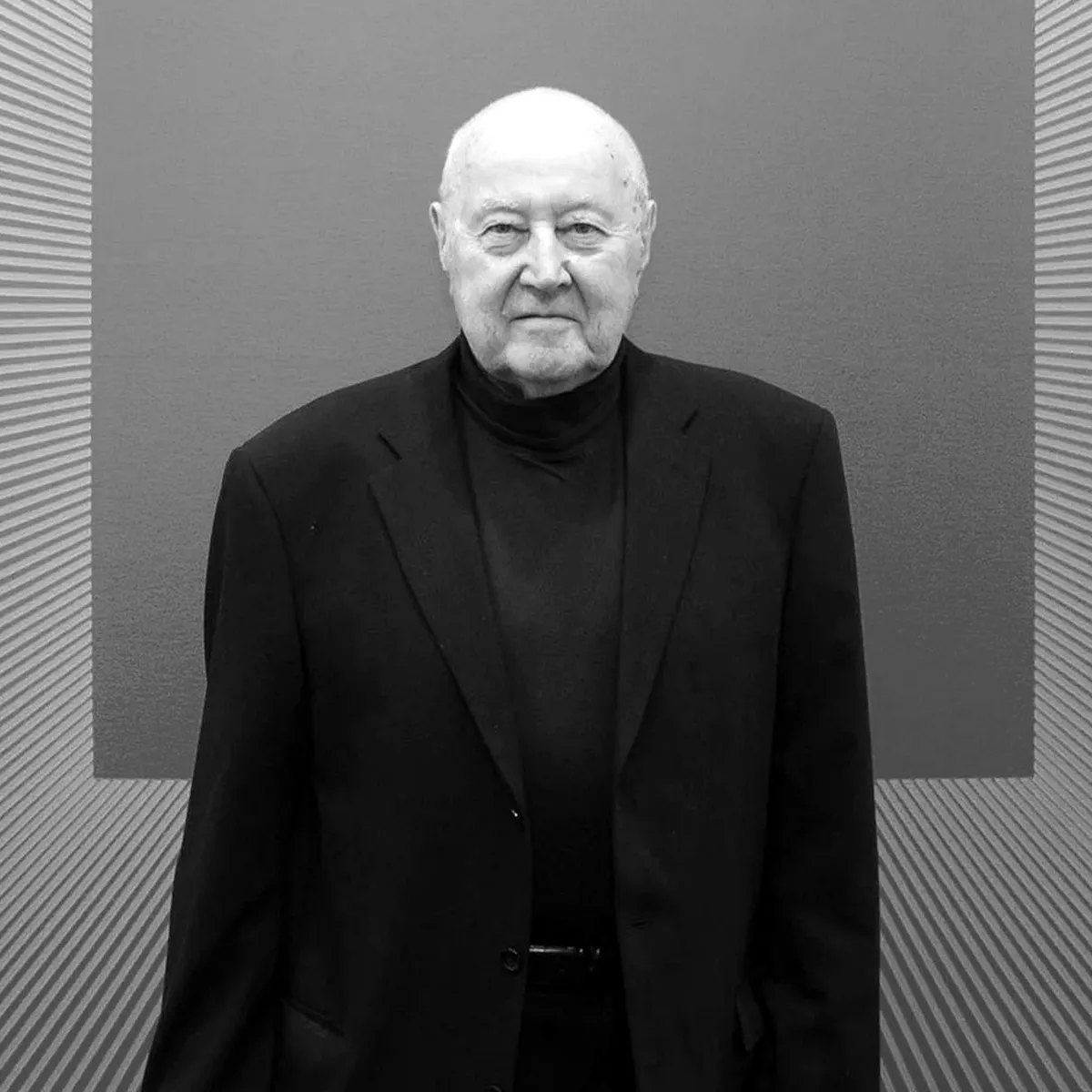
Richard Anuszkiewicz was born in Erie, Pennsylvania, in 1930, to Polish immigrant parents. He began studying art in high school under the teacher Joseph Plavcan, and from 1948 attended the Cleveland Institute of Art in Ohio, graduating with a Bachelor of Fine Arts in 1953. That year, he received a Pulitzer Traveling Fellowship. He then entered the Yale University School of Art and Architecture, where he studied under Josef Albers and earned a Master of Fine Arts degree in 1955. Under Albers’s influence, he abandoned figuration in favor of abstraction based on color. He then returned to Ohio and completed a Bachelor of Science in Education at Kent State University in 1956.
Anuszkiewicz moved to New York in the late 1950s and worked as a designer for Tiffany. In 1960, he held his first solo exhibition in New York, at The Contemporaries gallery. Shortly before the show closed, Alfred H. Barr Jr., director of the Museum of Modern Art, purchased one of his canvases for the museum. That year, he married Elizabeth Sally Feeney, with whom he had three children.
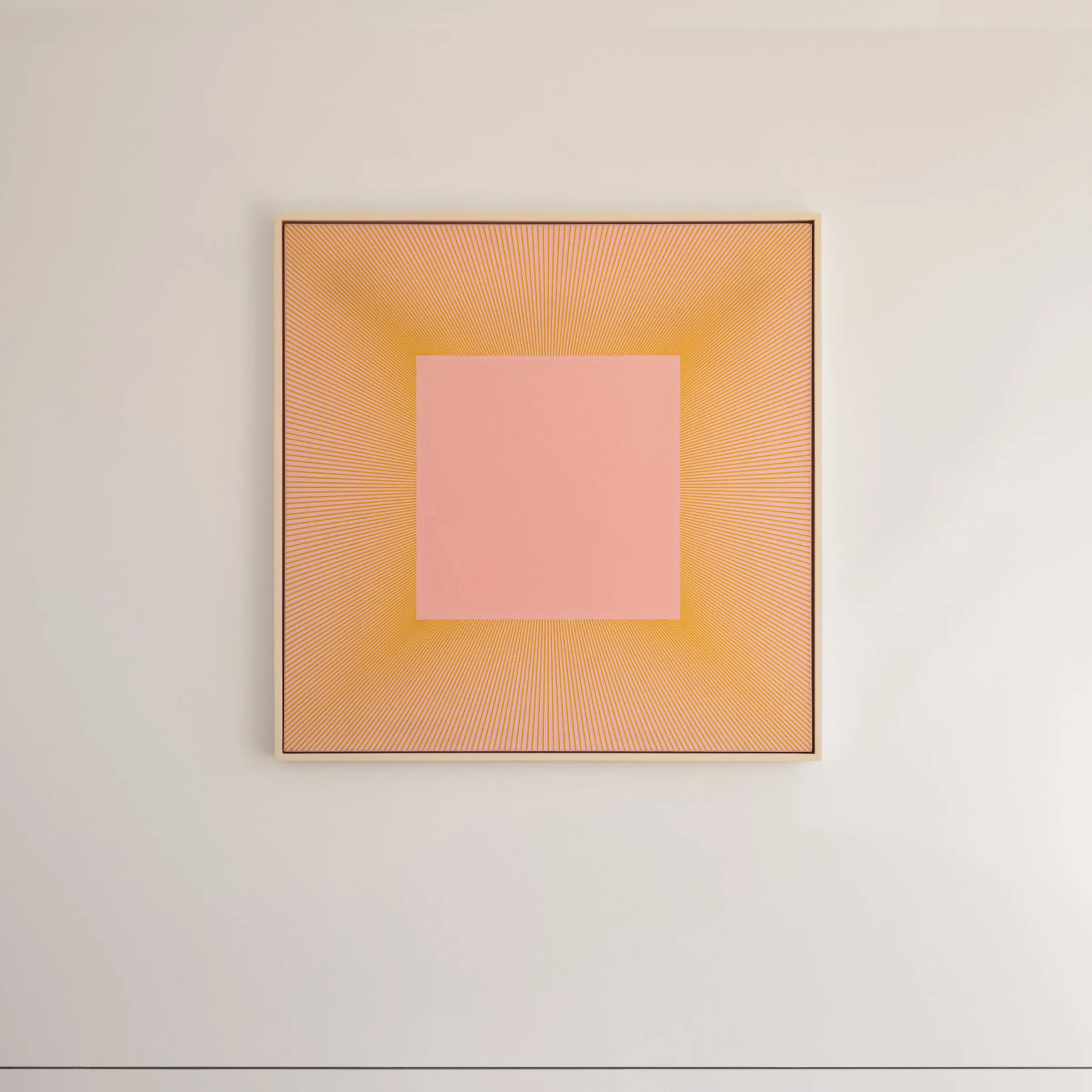
In 1963, Anuszkiewicz received the Charles of the Ritz Oil Painting Award, followed by the Silvermine Guild Award for Oil Painting in 1964, the year Life magazine called him “The New Wizard of Op.” By the mid-1960s, he had been included in several exhibitions at the Museum of Modern Art, among them The Responsive Eye in 1965, which established Optical Art as a movement. He was grouped with Bridget Riley and Victor Vasarely, among others, as a pioneer of the style. In 1965, he also began his “Sol” series, five radiating, concentric quadrilaterals shown at the Sidney Janis Gallery, a body of work influenced by Albers’s Homage to the Square.
The Cleveland Museum of Art mounted a major retrospective of his work in 1966, and in 1967 he was included in Documenta in Kassel, Germany. In 1971, his work appeared in Marcia Tucker’s The Structure of Color at the Whitney Museum of American Art. In the mid-1970s, he began his “Centered Square” paintings, and in 1977 he received the Cleveland Arts Prize. He received the American Academy of Arts and Letters’ Hassam Fund Purchase Award in 1980 and again in 1988. The National Academy of Design elected him an Associate member in 1992 and a full Academician in 1994.
Anuszkiewicz worked in other media as well. He produced screenprints, the first of which were issued by the Museum of Modern Art as Christmas cards, and made cubic sculptures. His commissions applied his patterns to objects including playing cards, utensils, and a fur coat. He taught at Cooper Union, the University of Wisconsin, Cornell University, and Kent State University.
In the 1980s, following a trip to Egypt, he began his “Temple” series, comprising shimmering columns inspired by the architecture he had seen. He later exhibited at the Venice and Florence Biennales, received the Lee Krasner Award in 2000, and was awarded the Lorenzo dei Medici Career Award at the Florence Biennale in 2005. Although critics sometimes used the term “Op” dismissively, and he distanced himself from the label, he continued to work in optical abstraction until the end of his life. He described his approach in his own words: “Color is my subject matter and its performance is my painting.”
Richard Anuszkiewicz died at his home in Englewood, New Jersey, in 2020, at the age of 89, a few days before his ninetieth birthday. His work can be found in prestigious private and institutional collections worldwide, including the Albright-Knox Art Gallery, Art Institute of Chicago, Brooklyn Museum, Corcoran Museum of Art, Solomon R. Guggenheim Museum, Hirshhorn Museum and Sculpture Garden, Metropolitan Museum of Art, Museum of Modern Art (MoMA), Philadelphia Museum of Art, Whitney Museum of American Art, and many others. In 2019, a painting was included in the Whitney’s Spilling Over: Painting Color in the 1960s.
Sources: David Richard Gallery, McClain Gallery, and Wikipedia
Richard Anuszkiewicz was born in Erie, Pennsylvania, in 1930, to Polish immigrant parents. He began studying art in high school under the teacher Joseph Plavcan, and from 1948 attended the Cleveland Institute of Art in Ohio, graduating with a Bachelor of Fine Arts in 1953. That year, he received a Pulitzer Traveling Fellowship. He then entered the Yale University School of Art and Architecture, where he studied under Josef Albers and earned a Master of Fine Arts degree in 1955. Under Albers’s influence, he abandoned figuration in favor of abstraction based on color. He then returned to Ohio and completed a Bachelor of Science in Education at Kent State University in 1956.
Anuszkiewicz moved to New York in the late 1950s and worked as a designer for Tiffany. In 1960, he held his first solo exhibition in New York, at The Contemporaries gallery. Shortly before the show closed, Alfred H. Barr Jr., director of the Museum of Modern Art, purchased one of his canvases for the museum. That year, he married Elizabeth Sally Feeney, with whom he had three children.
In 1963, Anuszkiewicz received the Charles of the Ritz Oil Painting Award, followed by the Silvermine Guild Award for Oil Painting in 1964, the year Life magazine called him “The New Wizard of Op.” By the mid-1960s, he had been included in several exhibitions at the Museum of Modern Art, among them The Responsive Eye in 1965, which established Optical Art as a movement. He was grouped with Bridget Riley and Victor Vasarely, among others, as a pioneer of the style. In 1965, he also began his “Sol” series, five radiating, concentric quadrilaterals shown at the Sidney Janis Gallery, a body of work influenced by Albers’s Homage to the Square.
The Cleveland Museum of Art mounted a major retrospective of his work in 1966, and in 1967 he was included in Documenta in Kassel, Germany. In 1971, his work appeared in Marcia Tucker’s The Structure of Color at the Whitney Museum of American Art. In the mid-1970s, he began his “Centered Square” paintings, and in 1977 he received the Cleveland Arts Prize. He received the American Academy of Arts and Letters’ Hassam Fund Purchase Award in 1980 and again in 1988. The National Academy of Design elected him an Associate member in 1992 and a full Academician in 1994.
Anuszkiewicz worked in other media as well. He produced screenprints, the first of which were issued by the Museum of Modern Art as Christmas cards, and made cubic sculptures. His commissions applied his patterns to objects including playing cards, utensils, and a fur coat. He taught at Cooper Union, the University of Wisconsin, Cornell University, and Kent State University.
In the 1980s, following a trip to Egypt, he began his “Temple” series, comprising shimmering columns inspired by the architecture he had seen. He later exhibited at the Venice and Florence Biennales, received the Lee Krasner Award in 2000, and was awarded the Lorenzo dei Medici Career Award at the Florence Biennale in 2005. Although critics sometimes used the term “Op” dismissively, and he distanced himself from the label, he continued to work in optical abstraction until the end of his life. He described his approach in his own words: “Color is my subject matter and its performance is my painting.”
Richard Anuszkiewicz died at his home in Englewood, New Jersey, in 2020, at the age of 89, a few days before his ninetieth birthday. His work can be found in prestigious private and institutional collections worldwide, including the Albright-Knox Art Gallery, Art Institute of Chicago, Brooklyn Museum, Corcoran Museum of Art, Solomon R. Guggenheim Museum, Hirshhorn Museum and Sculpture Garden, Metropolitan Museum of Art, Museum of Modern Art (MoMA), Philadelphia Museum of Art, Whitney Museum of American Art, and many others. In 2019, a painting was included in the Whitney’s Spilling Over: Painting Color in the 1960s.
Sources: David Richard Gallery, McClain Gallery, and Wikipedia