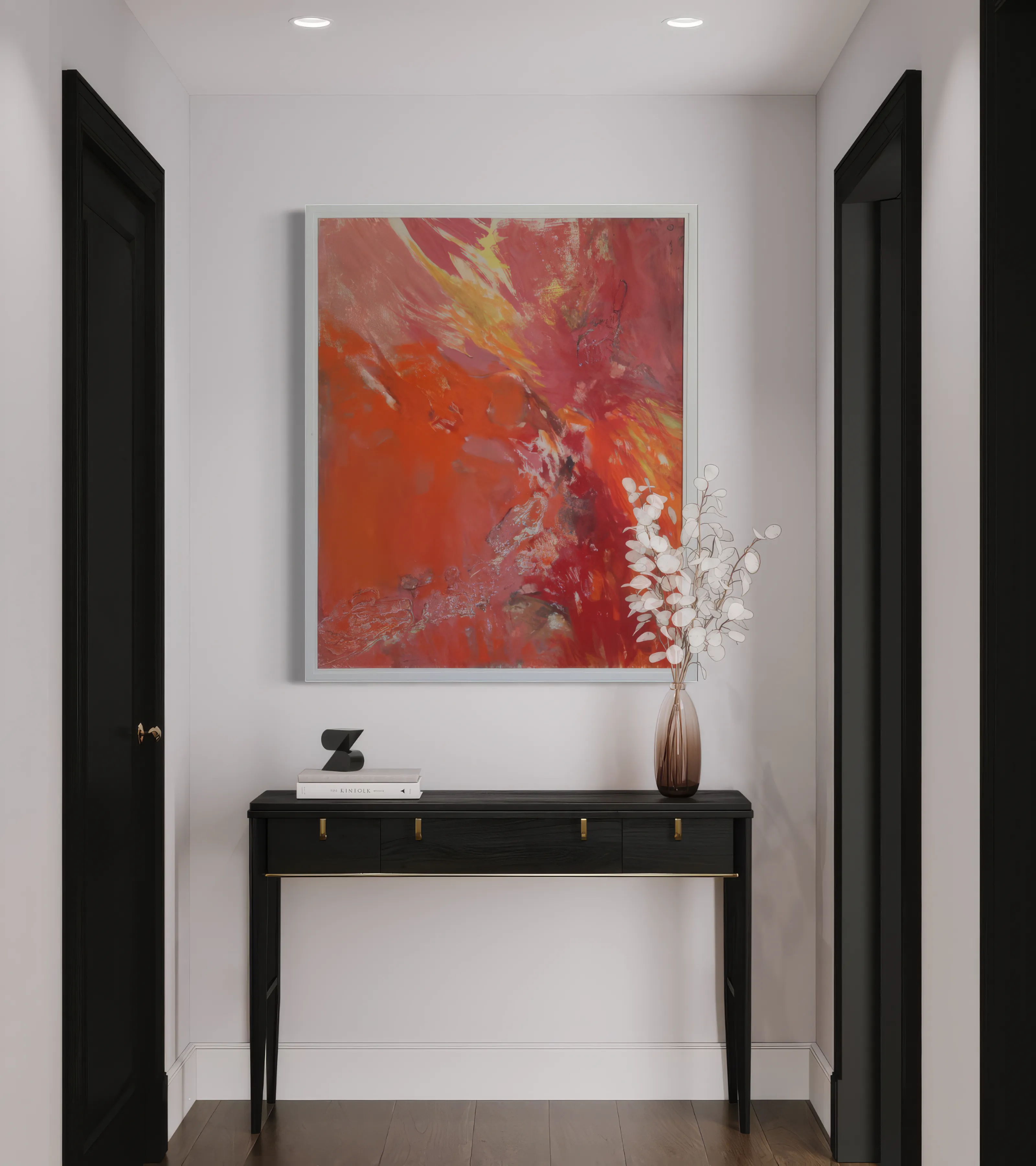
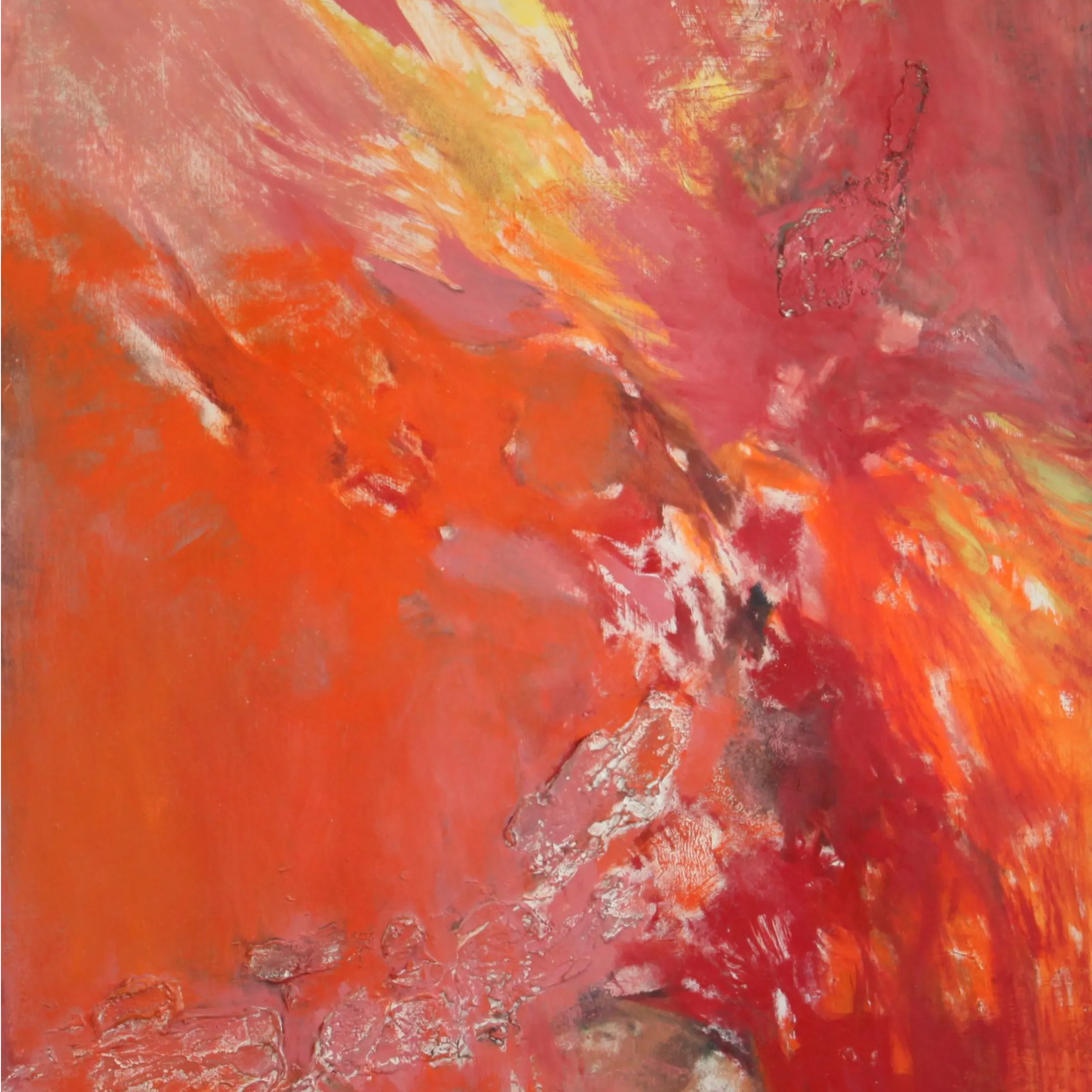
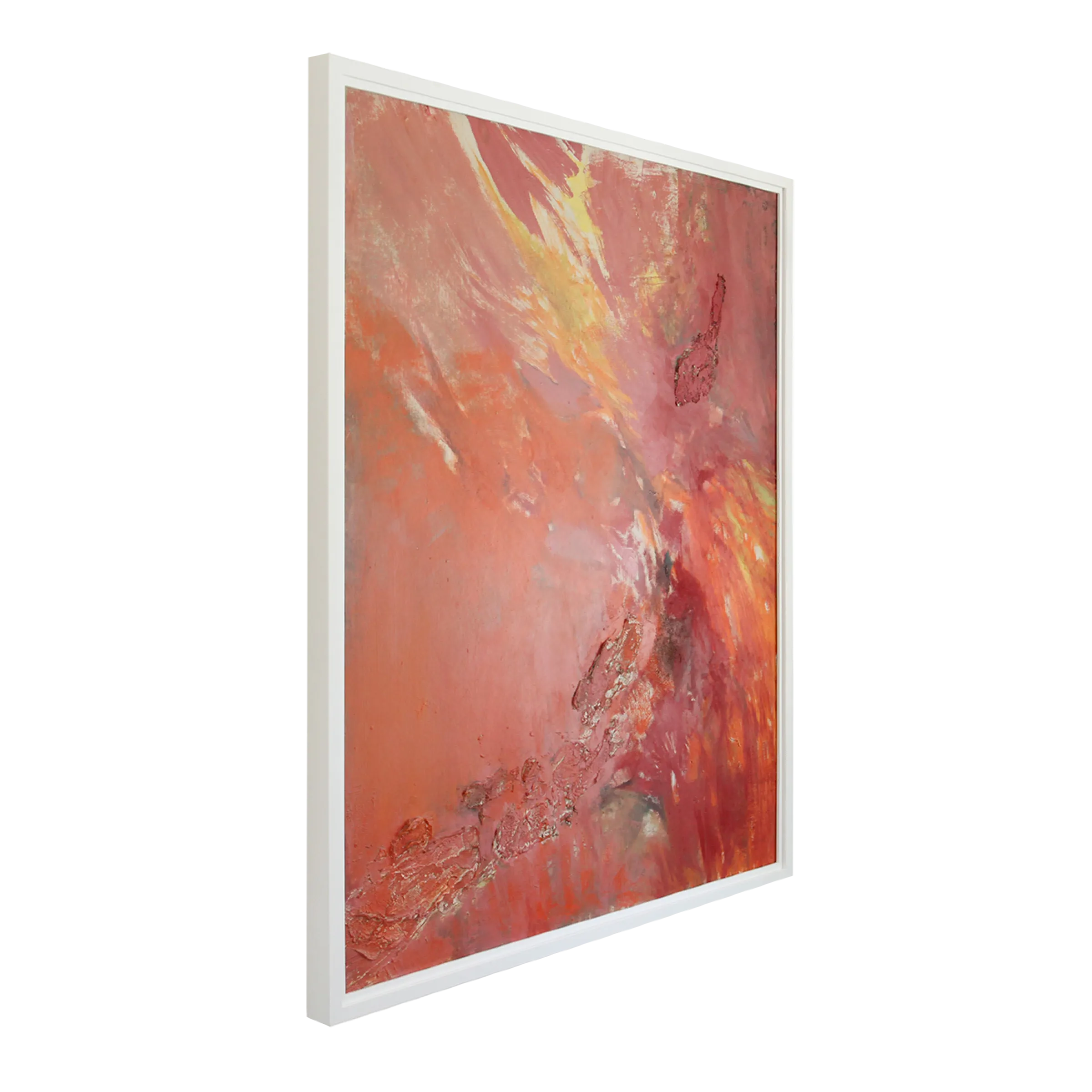
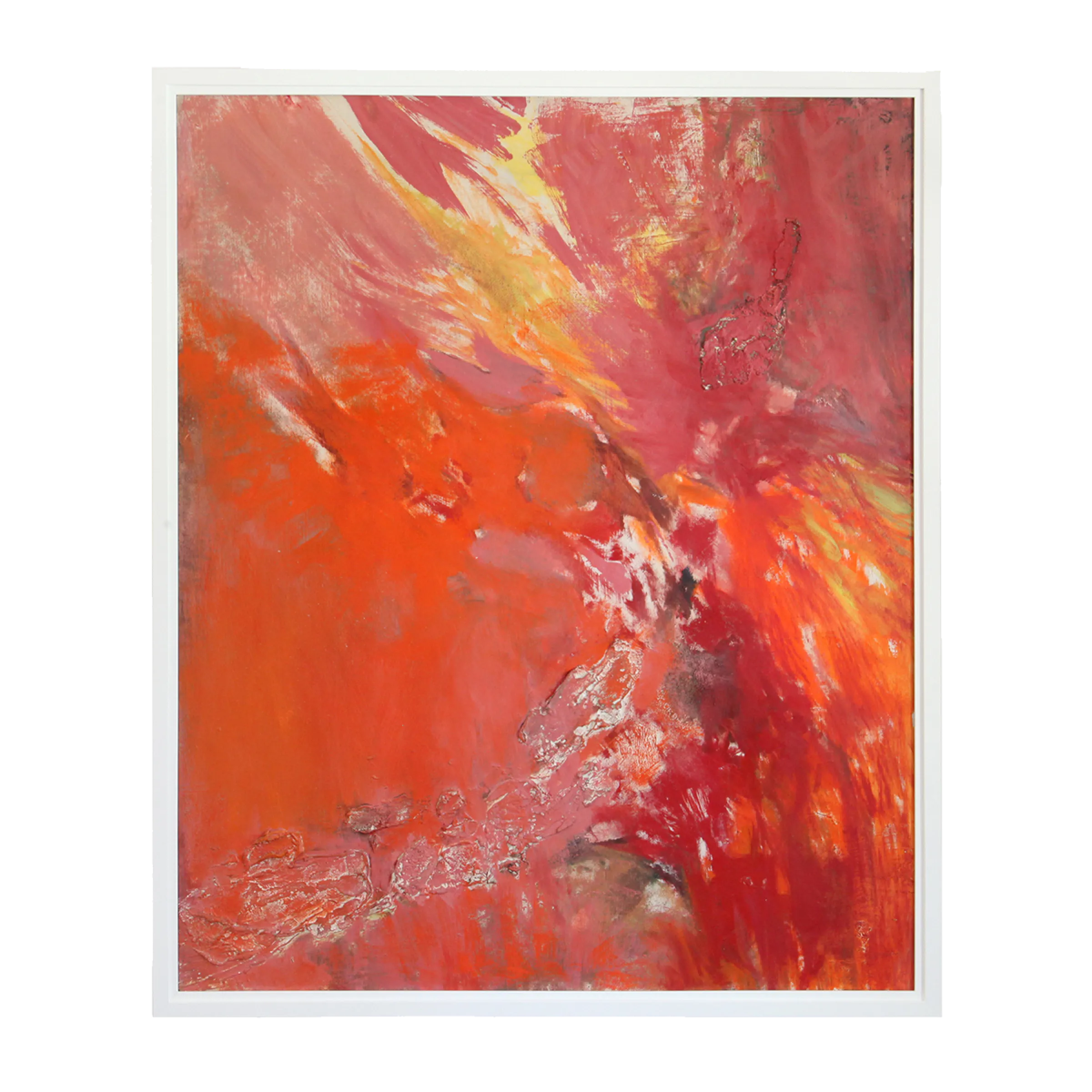
Consuming Reds
Aaronel deRoy Gruber
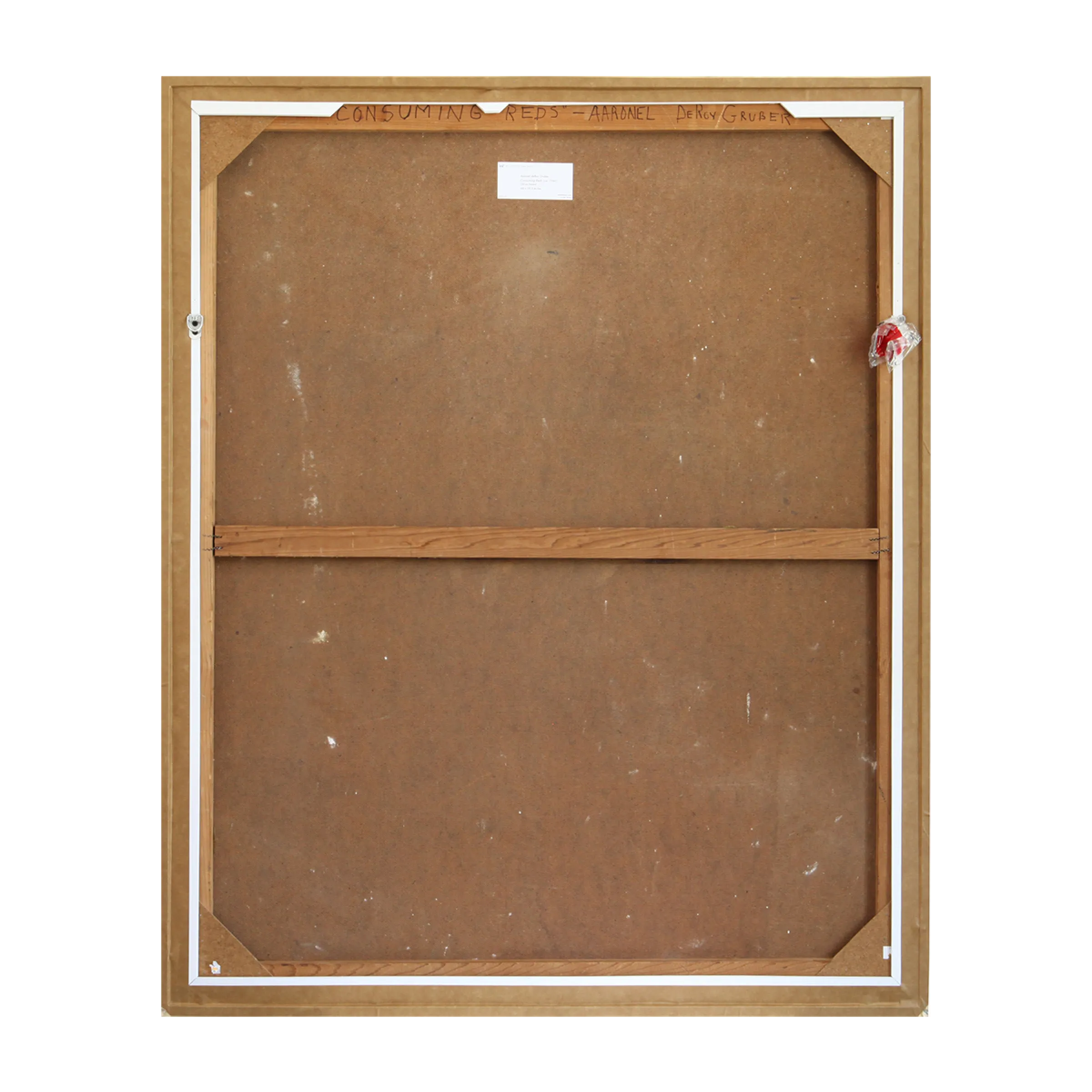
Overall good and stable condition. Light flaking and sporadic losses, mostly localized to areas of heavy impasto. Several patched nail holes and painted nail heads, stemming from the artist or a subsequent custodian’s attempt to secure the masonite to the rear stretcher bars. Not examined under UV light.
Custom framed in a two-tiered matte white hardwood tray frame.
n/a
Overall good and stable condition. Light flaking and sporadic losses, mostly localized to areas of heavy impasto. Several patched nail holes and painted nail heads, stemming from the artist or a subsequent custodian’s attempt to secure the masonite to the rear stretcher bars. Not examined under UV light.


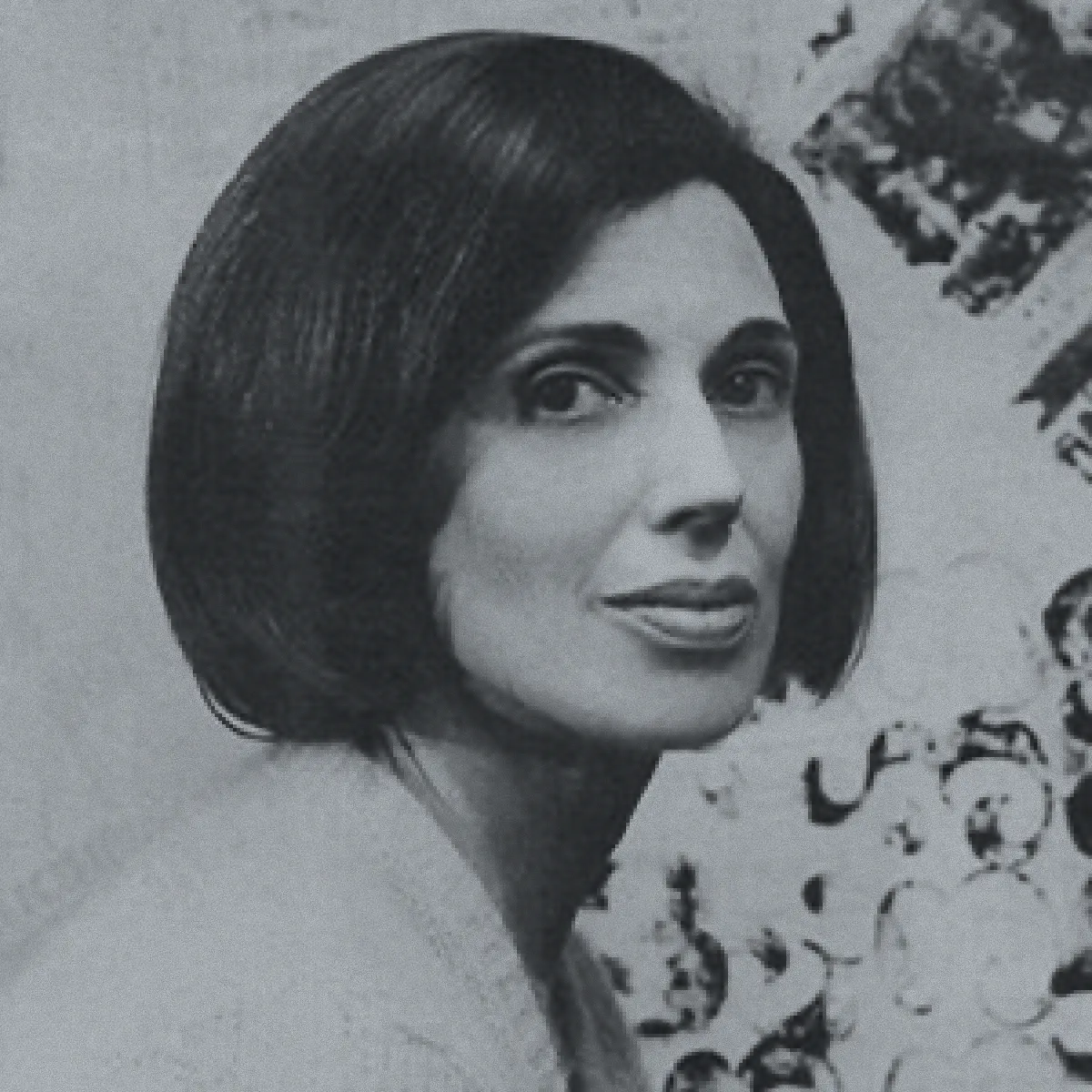
Aaronel deRoy Gruber
Aaronel deRoy Gruber showed artistic talent from childhood in Pittsburgh. While earning a bachelor of science degree at Carnegie Institute of Technology (now Carnegie Mellon University), she studied with influential professors including Samuel Rosenberg, Roy Hilton, Wilfred Readio, and Robert Lepper — the latter of whom also inspired Andy Warhol and Philip Pearlstein.
Gruber’s practice was multifaceted, spanning painting, steel and Plexiglas sculpture, and photography. In the 1960s, she became deeply engaged with abstraction in sculpture, influenced by David Smith. She met Smith in 1961, when he and Theodoros Stamos awarded her painting Mystery (1961) first prize at the Associated Artists of Pittsburgh annual exhibition.
Encouraged by Smith and supported by her husband Irving Gruber, she began creating steel sculptures. As plastic sculpture gained prominence, she became an innovator in kinetic Plexiglas works. She exhibited in “Made in Plastic” (1968) at the Flint Institute of Arts and “A Plastic Presence” (1969) at the Jewish Museum — the first major New York exhibition of plastic sculpture. Over the next two decades, she produced hundreds of illuminated, rotating Plexiglas sculptures collected worldwide.
In the 1980s, encouraged by her son Terry, she returned to photography, exploring both traditional and advanced digital processes.
Gruber’s work is held in the permanent collections of the Carnegie Museum of Art, the Butler Institute of American Art, the Westmoreland Museum of American Art, the Frick Art Museum, the Smithsonian Institution, and the Kawamura Museum of Modern Art in Japan.
Source: The Irving and Aaronel deRoy Gruber Foundation
Aaronel deRoy Gruber showed artistic talent from childhood in Pittsburgh. While earning a bachelor of science degree at Carnegie Institute of Technology (now Carnegie Mellon University), she studied with influential professors including Samuel Rosenberg, Roy Hilton, Wilfred Readio, and Robert Lepper — the latter of whom also inspired Andy Warhol and Philip Pearlstein.
Gruber’s practice was multifaceted, spanning painting, steel and Plexiglas sculpture, and photography. In the 1960s, she became deeply engaged with abstraction in sculpture, influenced by David Smith. She met Smith in 1961, when he and Theodoros Stamos awarded her painting Mystery (1961) first prize at the Associated Artists of Pittsburgh annual exhibition.
Encouraged by Smith and supported by her husband Irving Gruber, she began creating steel sculptures. As plastic sculpture gained prominence, she became an innovator in kinetic Plexiglas works. She exhibited in “Made in Plastic” (1968) at the Flint Institute of Arts and “A Plastic Presence” (1969) at the Jewish Museum — the first major New York exhibition of plastic sculpture. Over the next two decades, she produced hundreds of illuminated, rotating Plexiglas sculptures collected worldwide.
In the 1980s, encouraged by her son Terry, she returned to photography, exploring both traditional and advanced digital processes.
Gruber’s work is held in the permanent collections of the Carnegie Museum of Art, the Butler Institute of American Art, the Westmoreland Museum of American Art, the Frick Art Museum, the Smithsonian Institution, and the Kawamura Museum of Modern Art in Japan.
Source: The Irving and Aaronel deRoy Gruber Foundation
Heading


