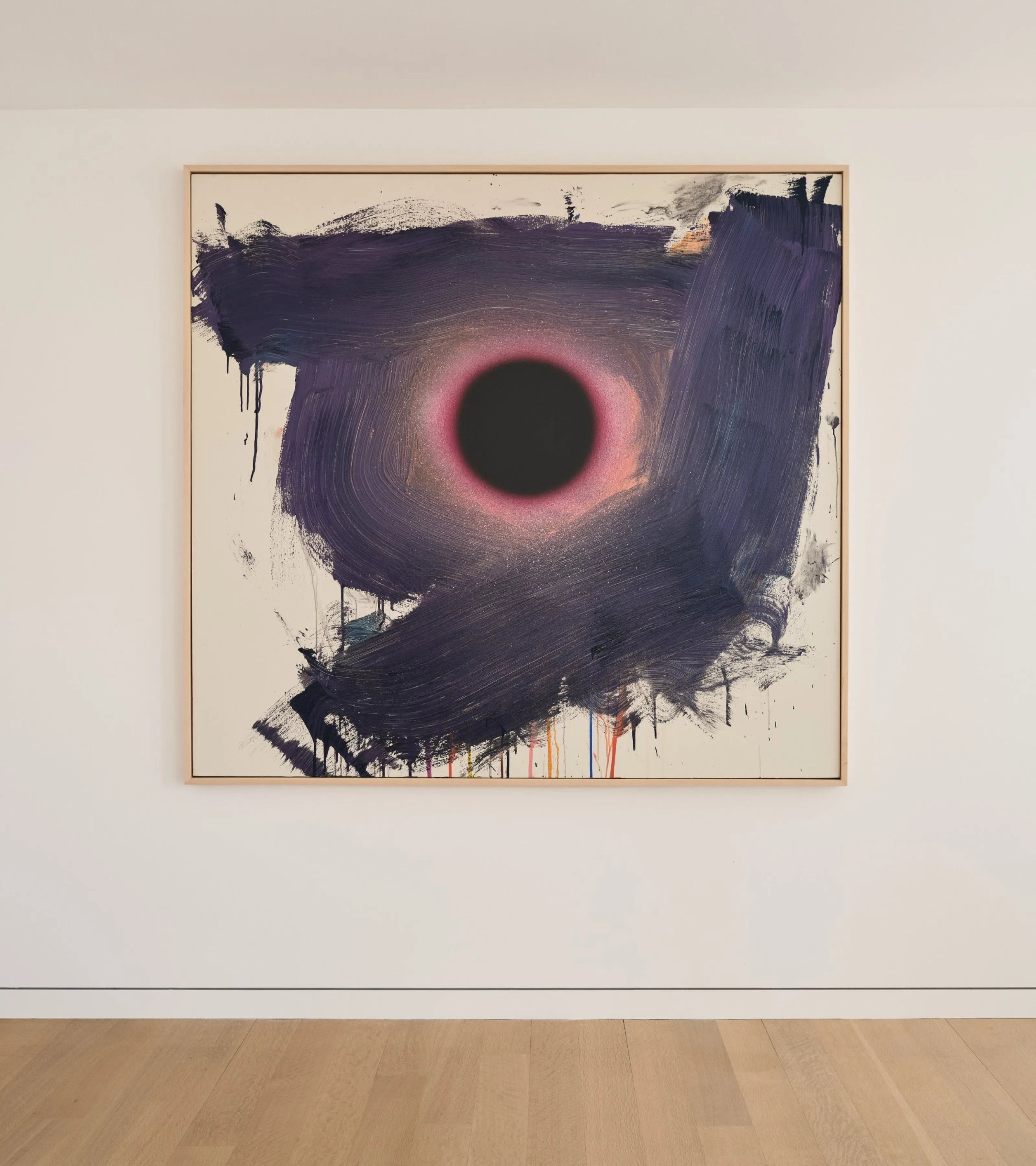
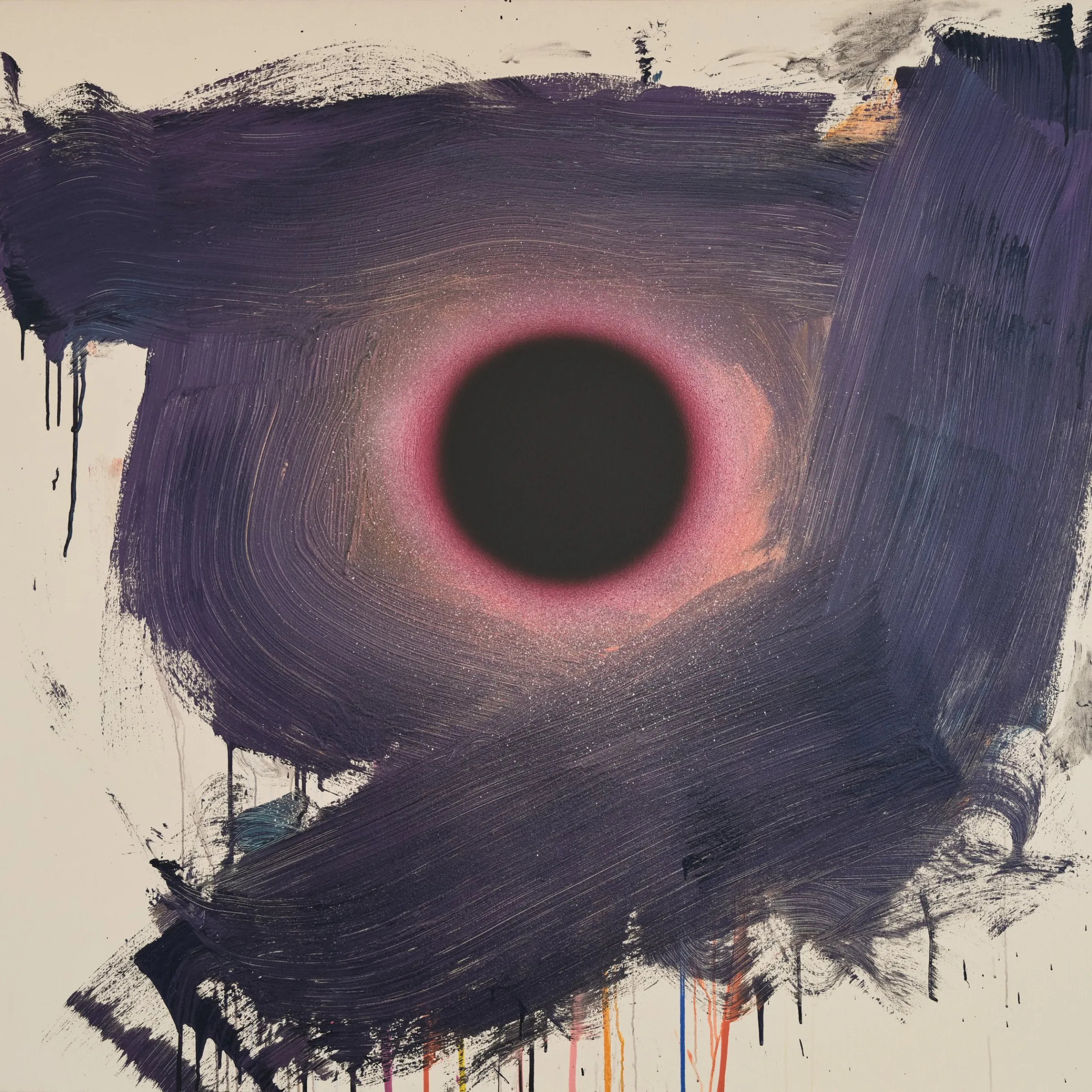
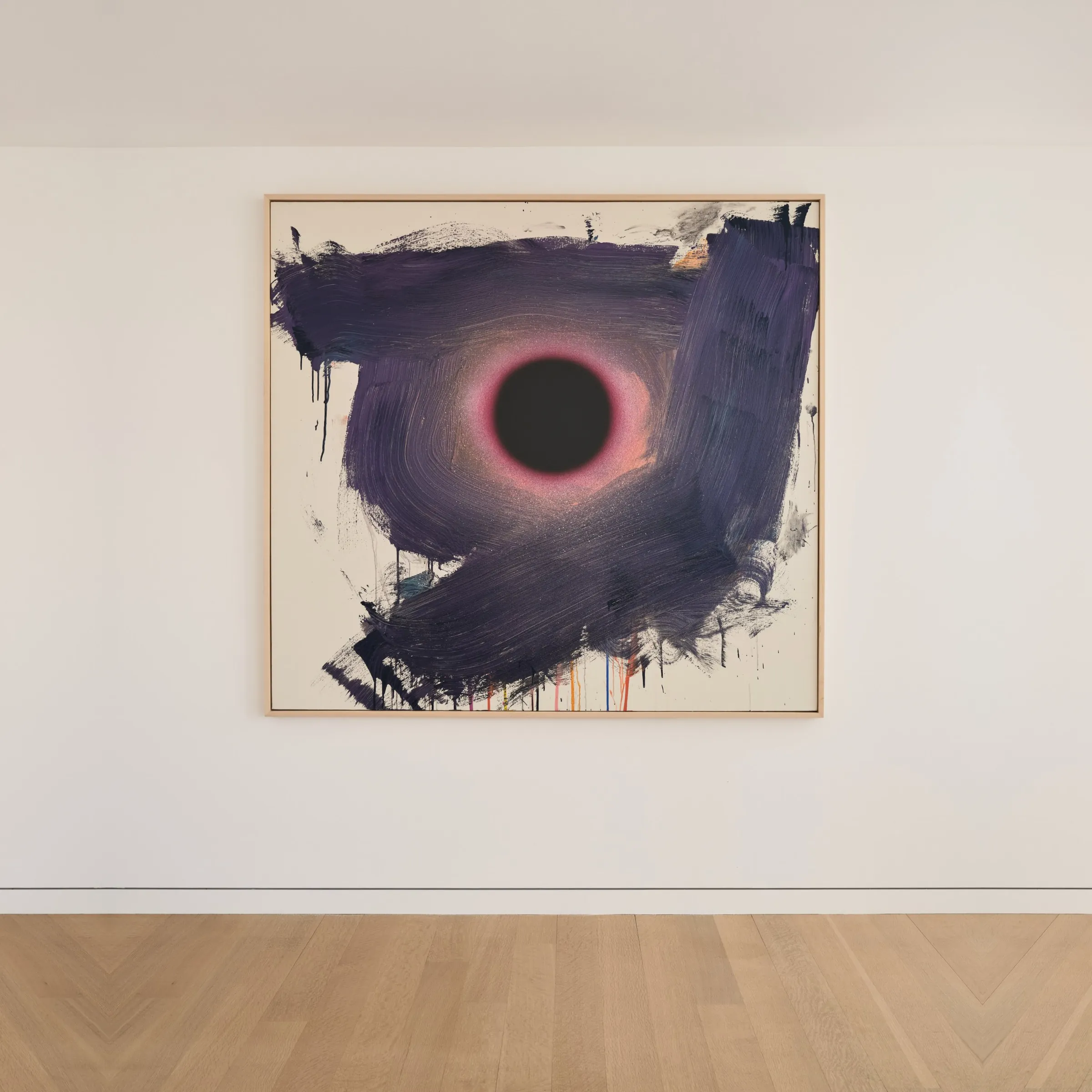
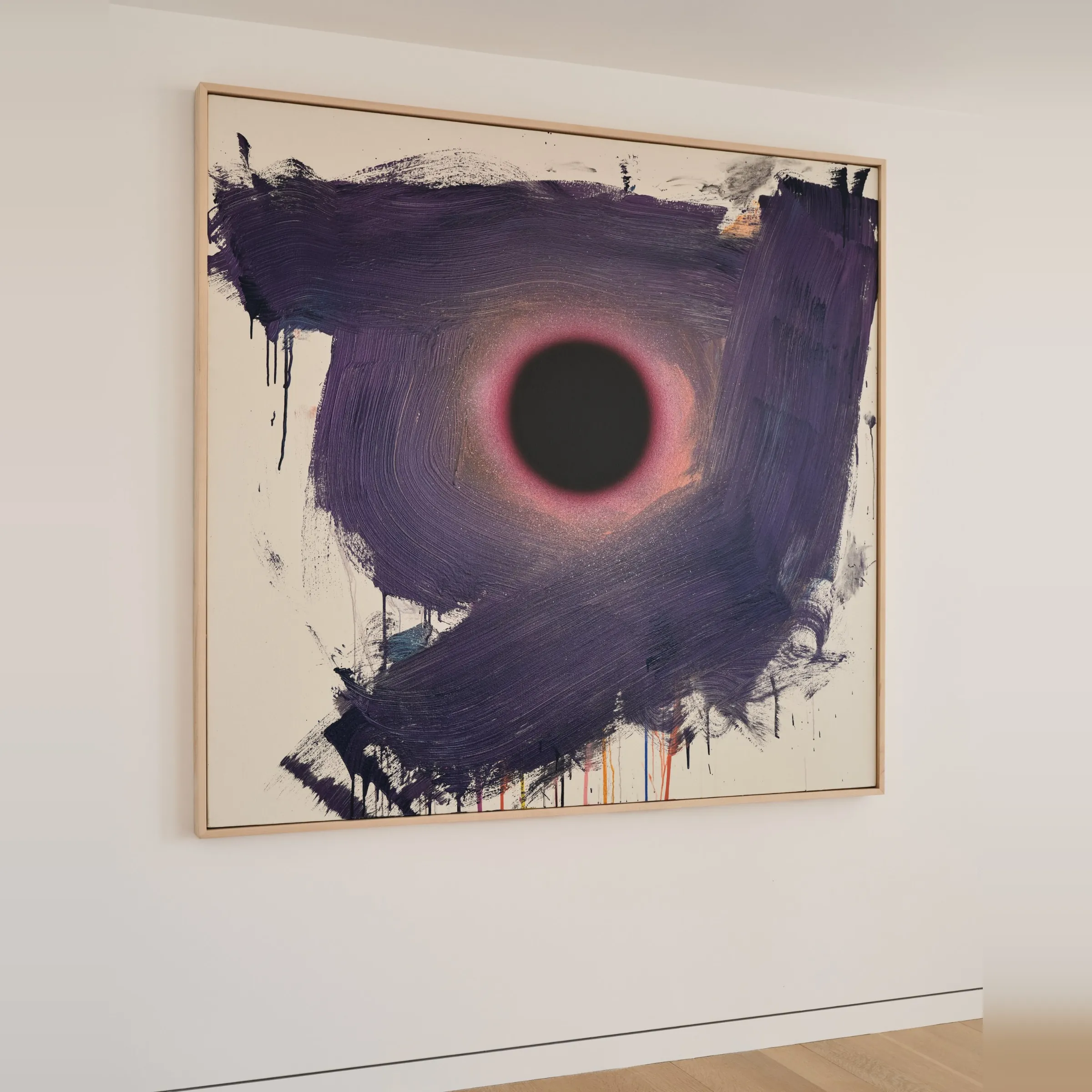
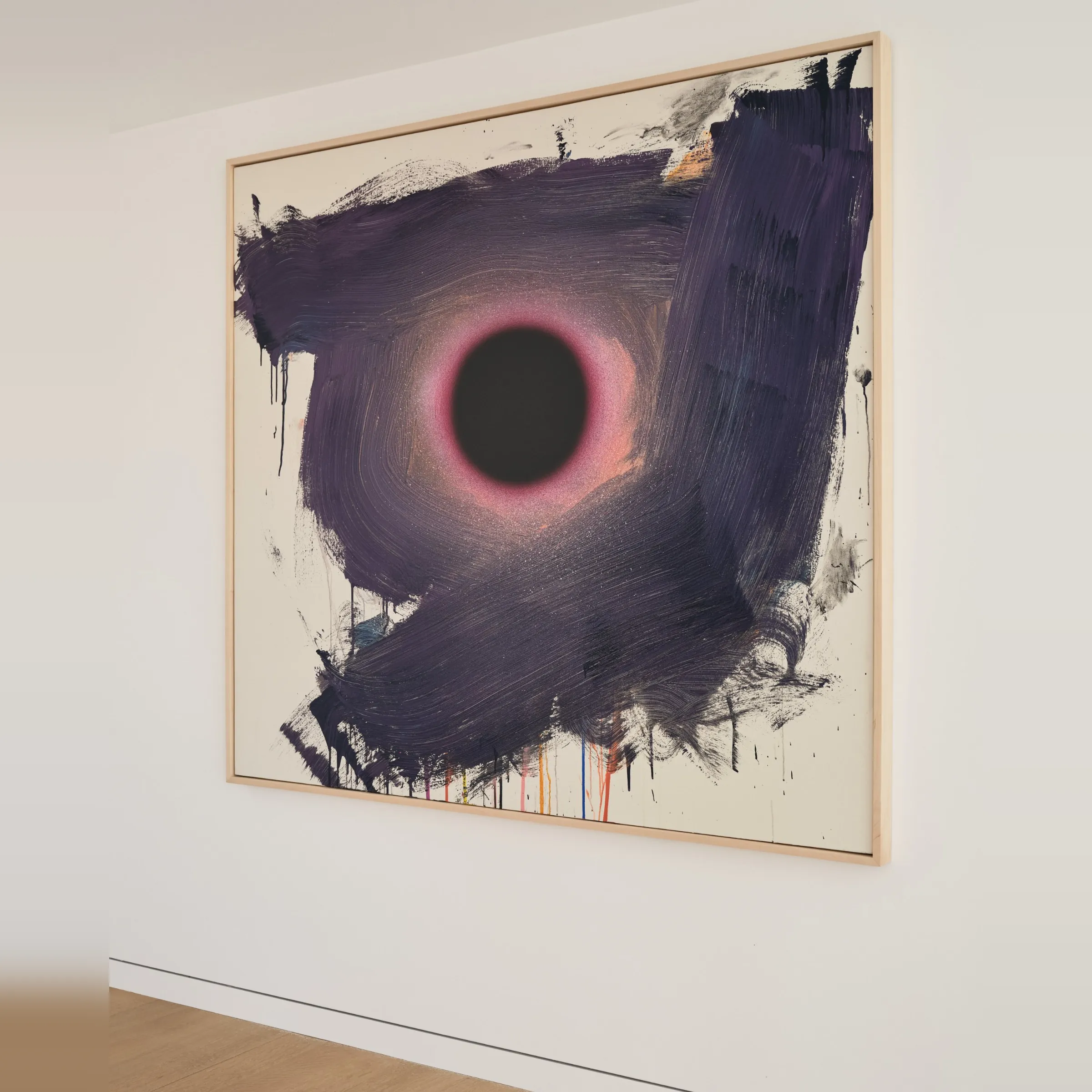
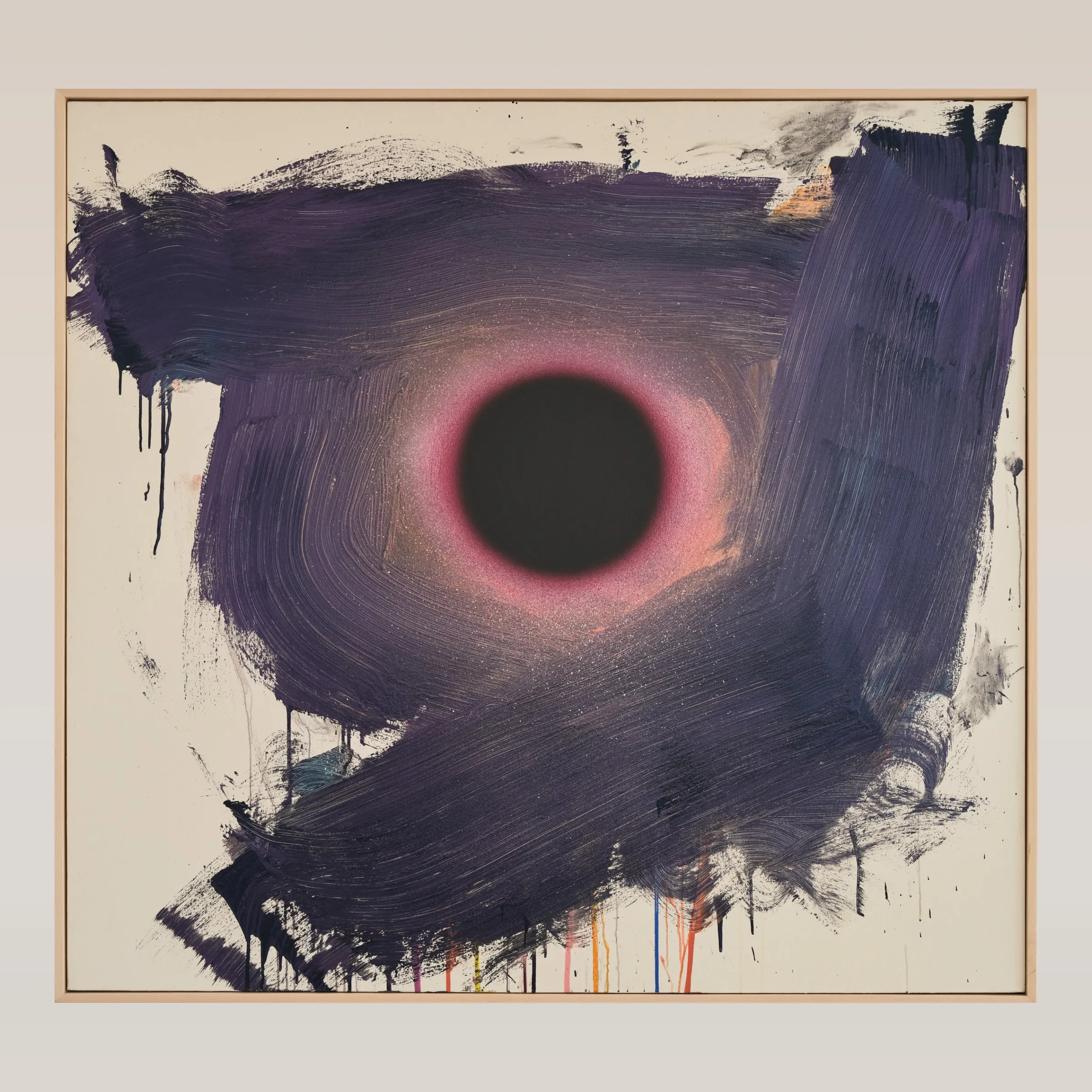
Dolby
Dan Christensen
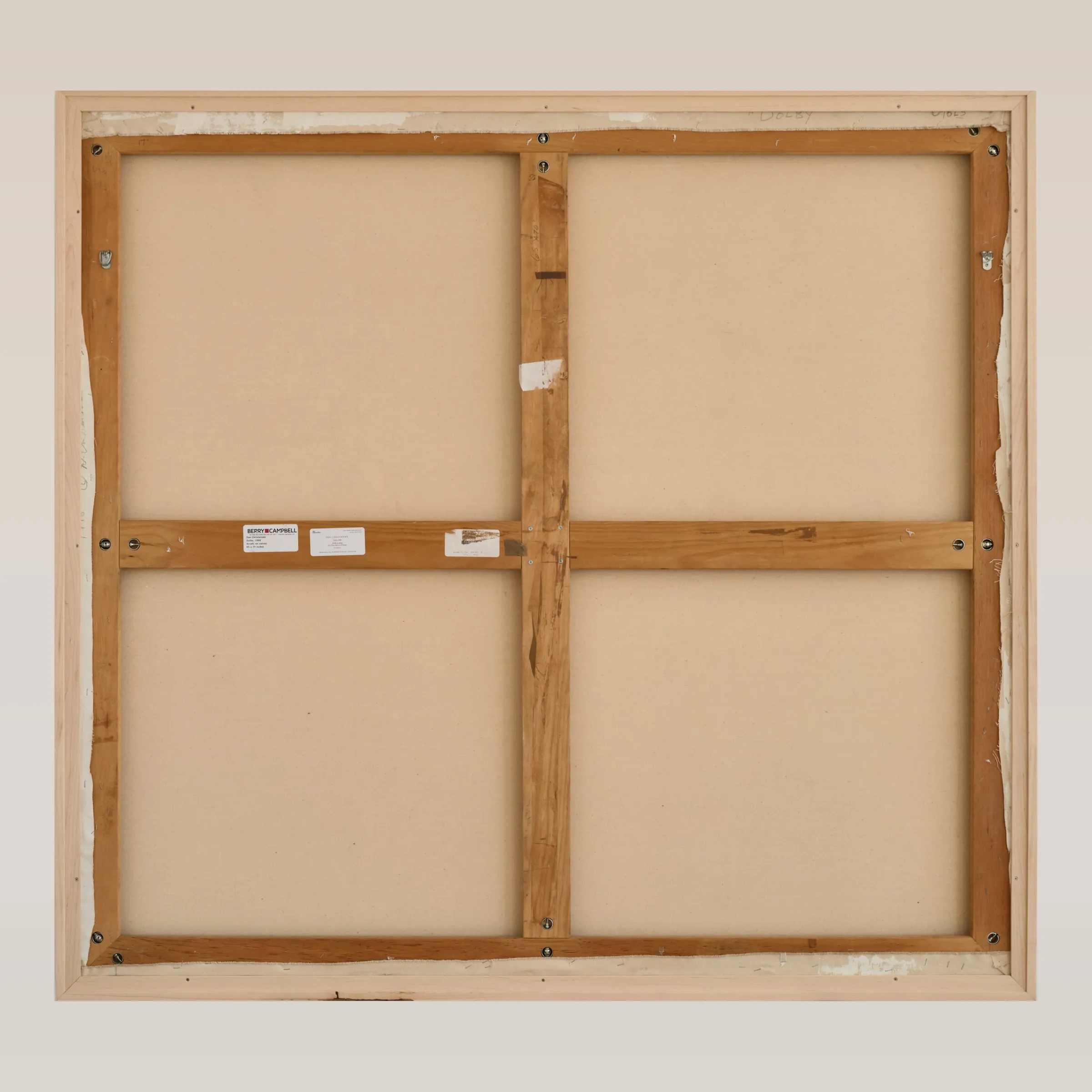
Signed, titled, and dated along rear supports.
Custom framed in a solid, unfinished maple floater.
Estate of Dan Christensen, East Hampton, NY
Berry Campbell Gallery, New York
Private Collection, United States
Exhibitions
Dan Christensen | Retrospective, September 17-October 17, 2015. Berry Campbell Gallery, New York.
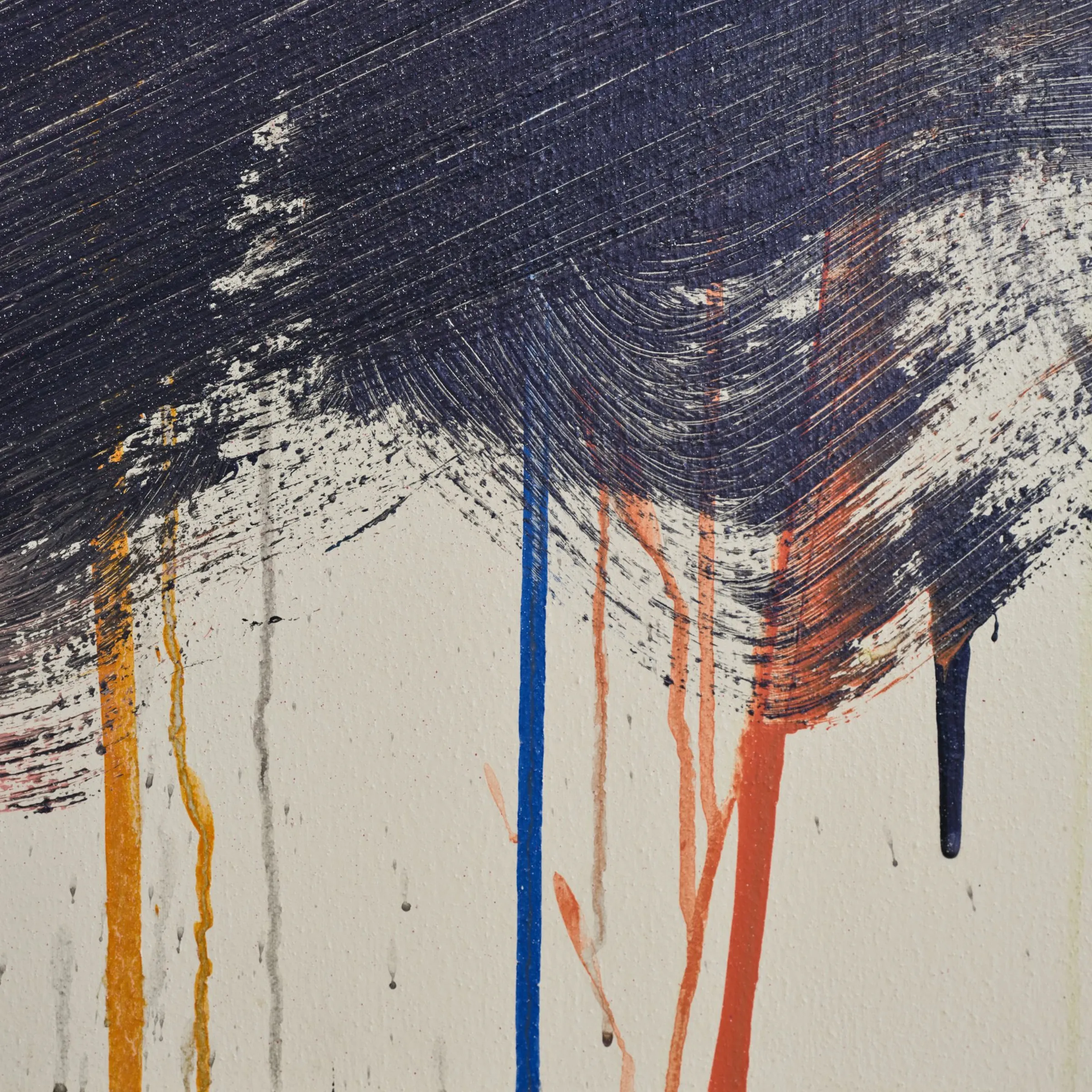
Overall very good condition. No apparent evidence of damage or prior repairs. Not examined under UV light.



Dan Christensen
Dan Christensen was born in Lexington, Nebraska, in 1942, and grew up outside Cozad. His father was a farmer, and his mother taught art and math. At sixteen, he left home to attend a commercial art school in Denver, where he saw the work of Jackson Pollock, an encounter that stayed with him. He then studied at Chadron State College in Nebraska under the ceramist and illustrator William Artis, and in 1960 enrolled at the Kansas City Art Institute, where he trained in figure drawing and painting. He graduated in 1964 with a Bachelor of Fine Arts as class valedictorian, and spent a year in graduate study at Indiana University on a fellowship, working as a graduate assistant.
In 1965, Christensen moved to New York City and joined a close-knit circle of young artists. From 1965 to 1967, he painted minimalist works in acrylic, built from rectangular bars. At Max’s Kansas City, he met the dealer Richard Bellamy, who offered to represent him in 1966. His first major sale was to the collector James Michener. In 1967, he began working with a spray gun, producing his first spray paintings of circles and loops. That year he had his first solo exhibition at the Noah Goldowsky Gallery in New York, and he was included in the Whitney Museum of American Art’s Annual. After seeing the Pollock retrospective at the Museum of Modern Art in 1968, he shifted to the looping, ribbon-like spray paintings for which he became best known.
Christensen received a National Endowment for the Arts grant in 1968 and a Guggenheim Fellowship in 1969. That year he also took part in the Guggenheim Museum’s Theodoran Award group exhibition and was included in the Whitney Annual. His first one-person exhibition at the André Emmerich Gallery took place in 1969, and the gallery exhibited his work regularly through 1976. Other solo exhibitions of the period included Galerie Ricke in Germany in 1968 and 1971 and Nicholas Wilder Gallery in Los Angeles in 1970 and 1972. He participated in Color and Field, 1890–1970 at the Albright-Knox Art Gallery, the Whitney Annual of 1972, and the Whitney Biennial of 1973.
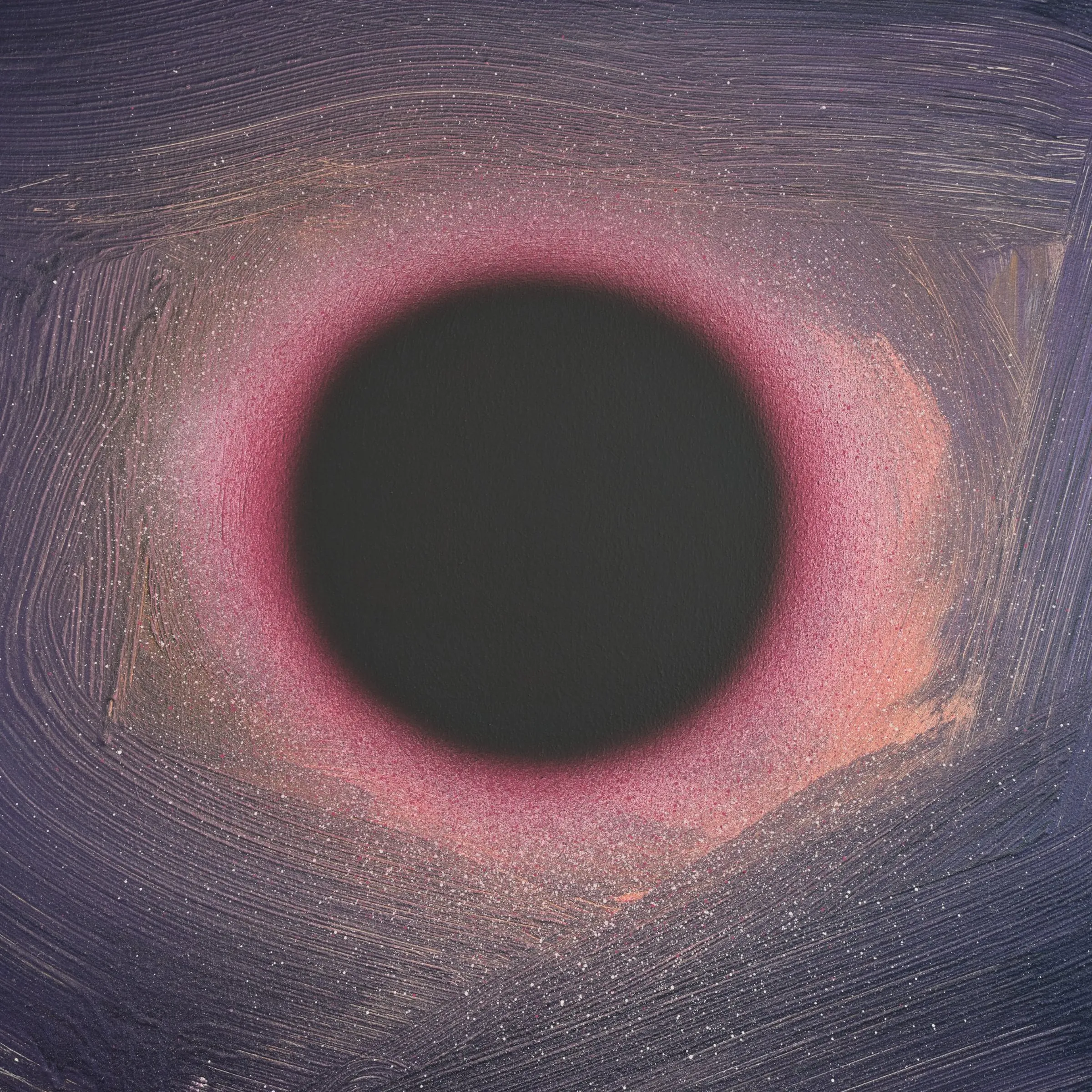
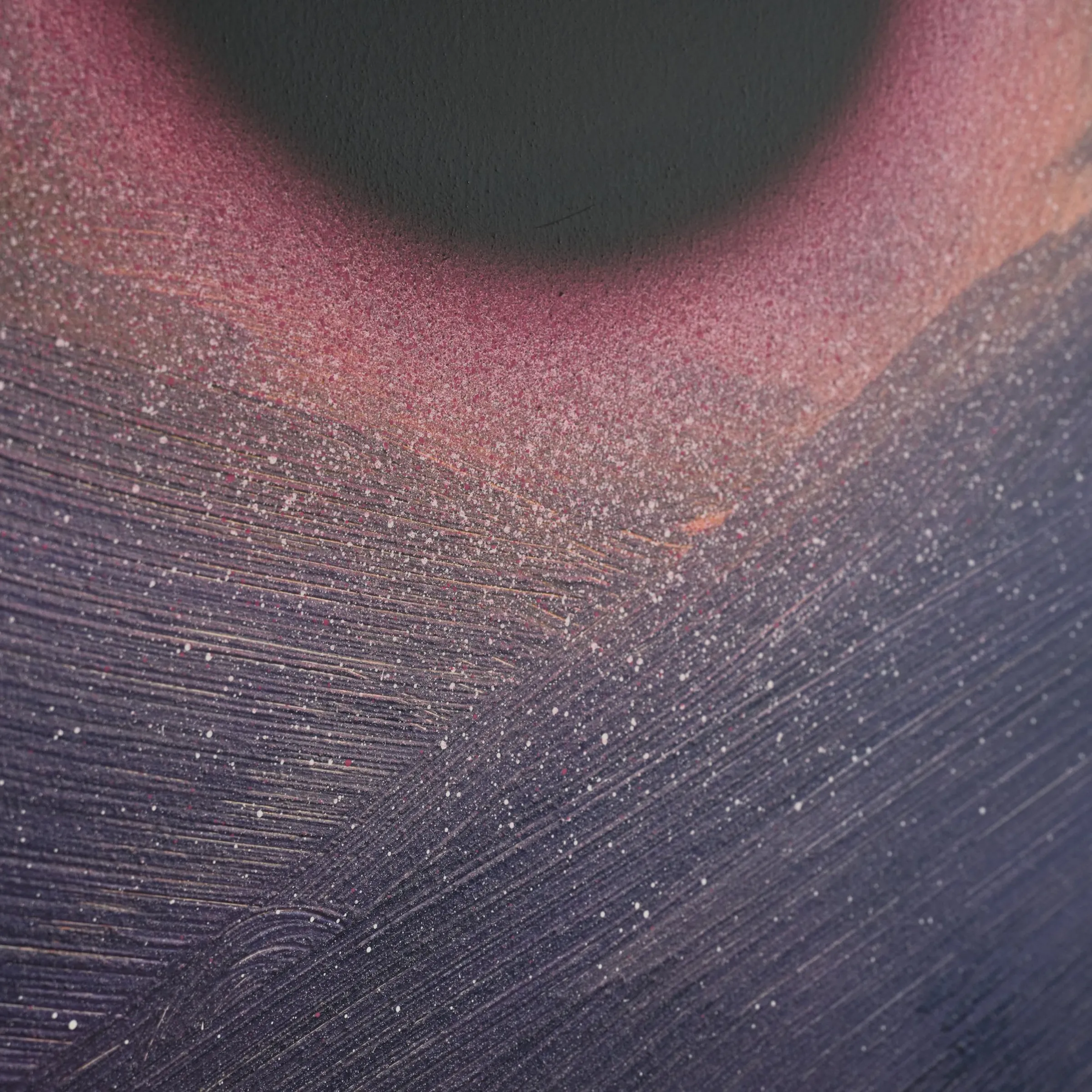
His work continued to change. Between 1969 and 1975, he made plaid, slab, and scrape paintings, applying paint with squeegees and rollers to unstretched canvas. From 1976 to 1988, he made calligraphic stain paintings, applying thinned acrylic with sticks, brushes, and turkey basters. In 1988, he returned to the spray gun for paintings of spherical, iridescent orbs, a series that continued through 1994. His later work included further calligraphic stains and a series of “last loops.” His work was included in New Work on Paper I at the Museum of Modern Art in 1981 and Two Decades of American Painting at the Guggenheim in 1993, and he received grants from the Gottlieb Foundation in 1986 and the Pollock-Krasner Foundation in 1992.
In 2001 and 2002, the Butler Institute of American Art in Youngstown, Ohio, held a survey of his work. In the late years of his life, he moved with his family to East Hampton, New York. He was married to the artist Elaine Grove, and they had two sons, James and William.
Dan Christensen died in East Hampton on January 20, 2007, at the age of 64. His work can be found in prestigious private and institutional collections worldwide, including the Metropolitan Museum of Art, Museum of Modern Art (MoMA), Whitney Museum of American Art, Solomon R. Guggenheim Museum, Art Institute of Chicago, Hirshhorn Museum and Sculpture Garden, Museum of Fine Arts, Boston, and Smithsonian American Art Museum, among more than thirty others. In 2009, the Kemper Museum of Contemporary Art in Kansas City organized Dan Christensen: Forty Years of Painting, a survey that was also shown at the Sheldon Museum of Art in Lincoln, Nebraska.
Sources: Berry Campbell Gallery and the Sheldon Museum of Art
Heading


