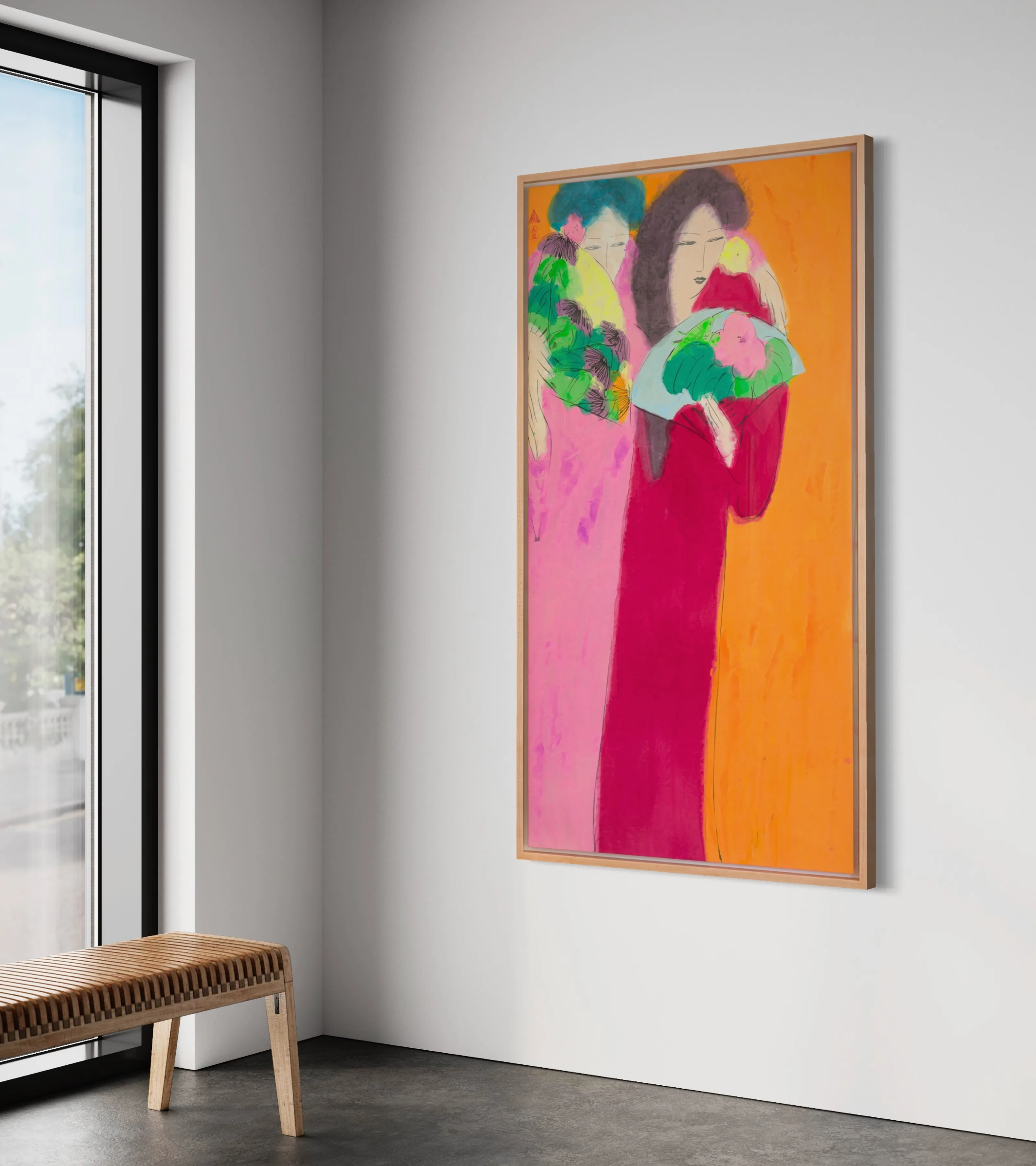
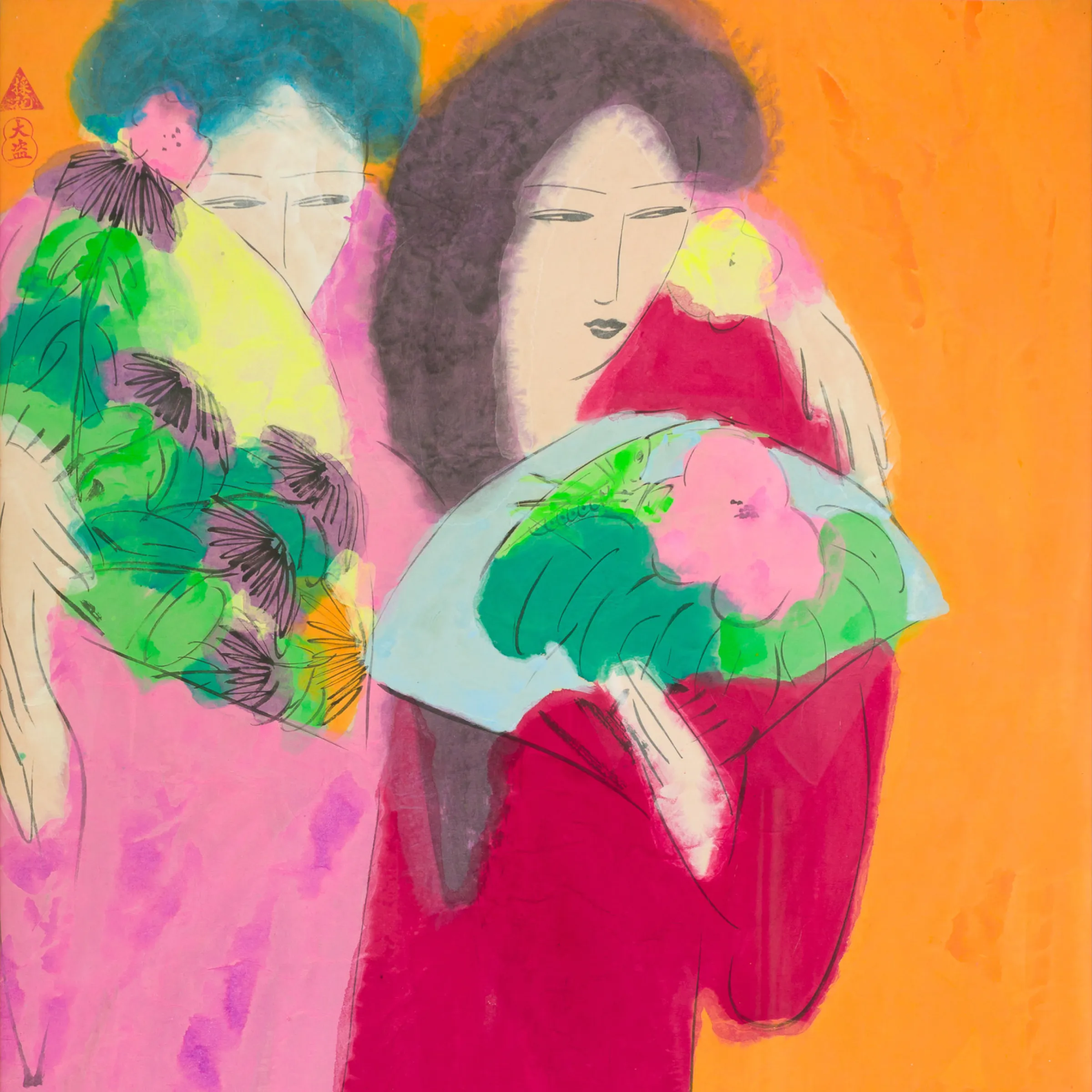
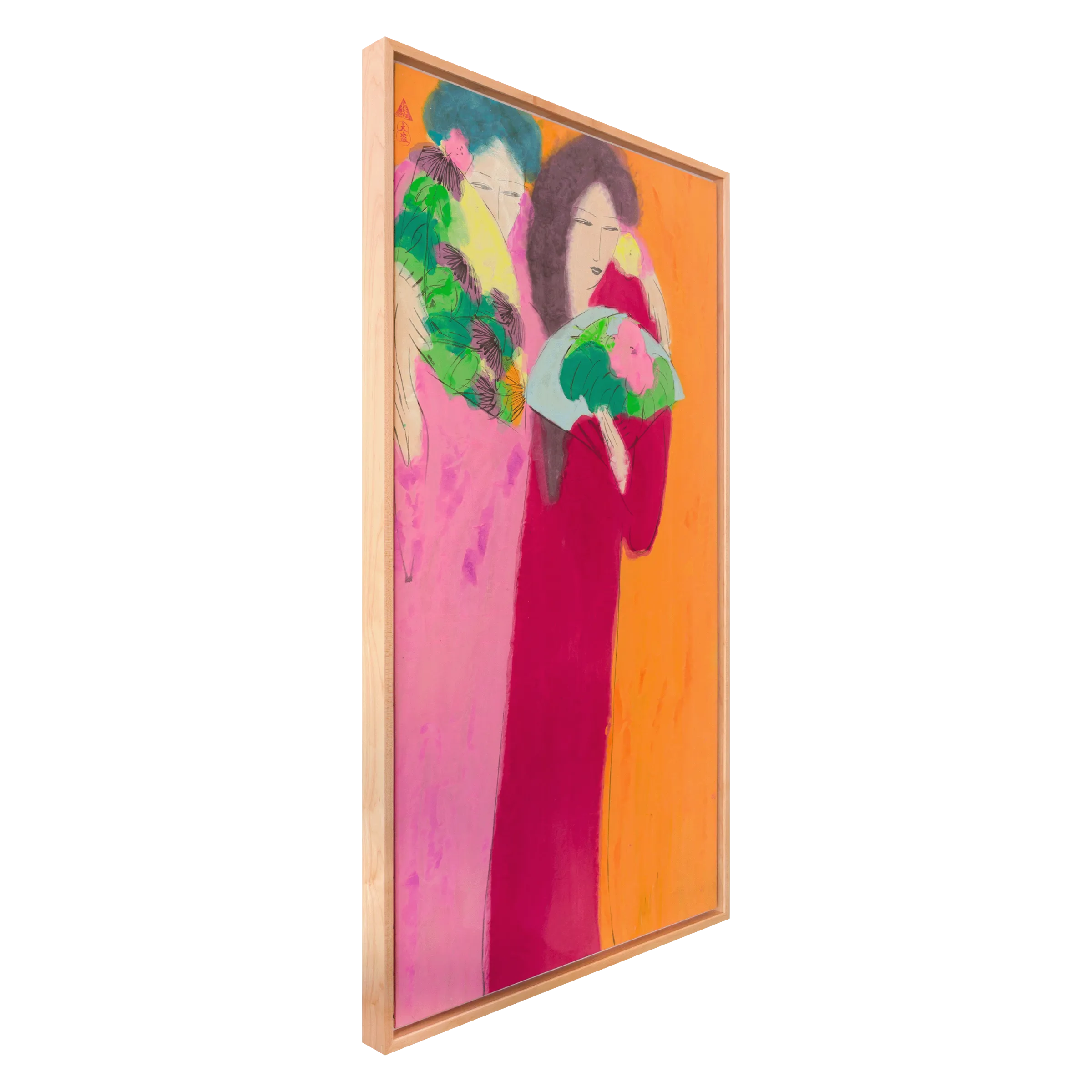
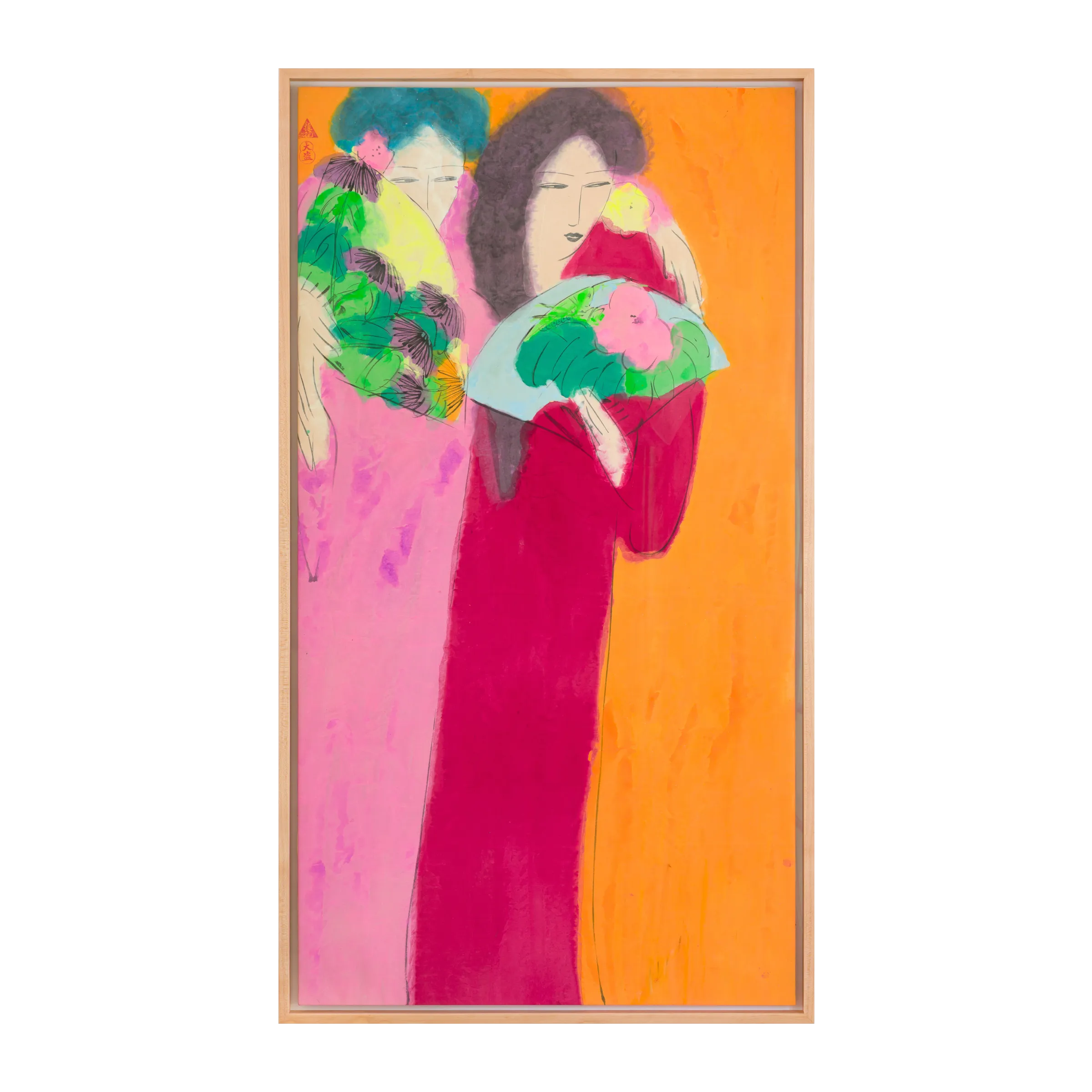
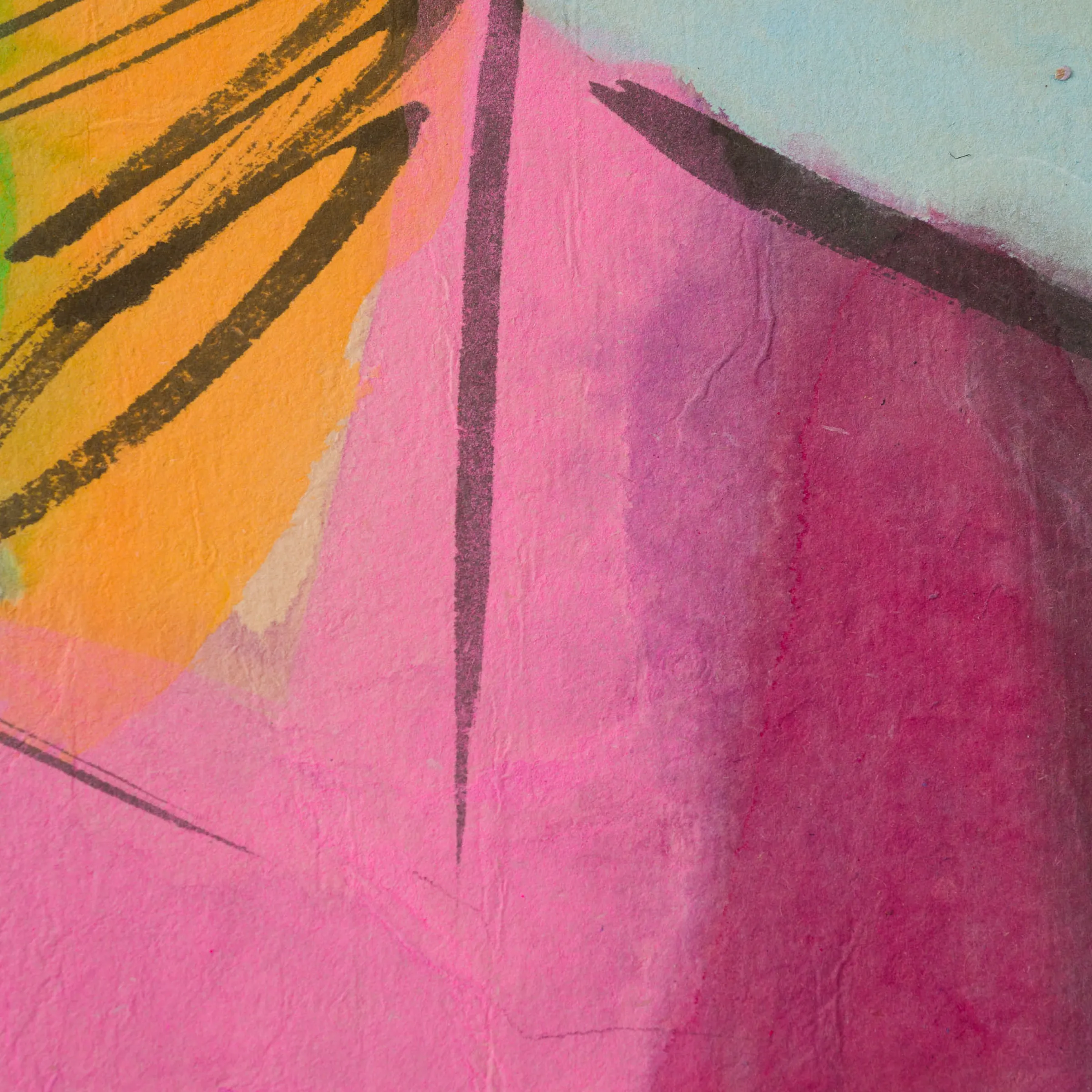
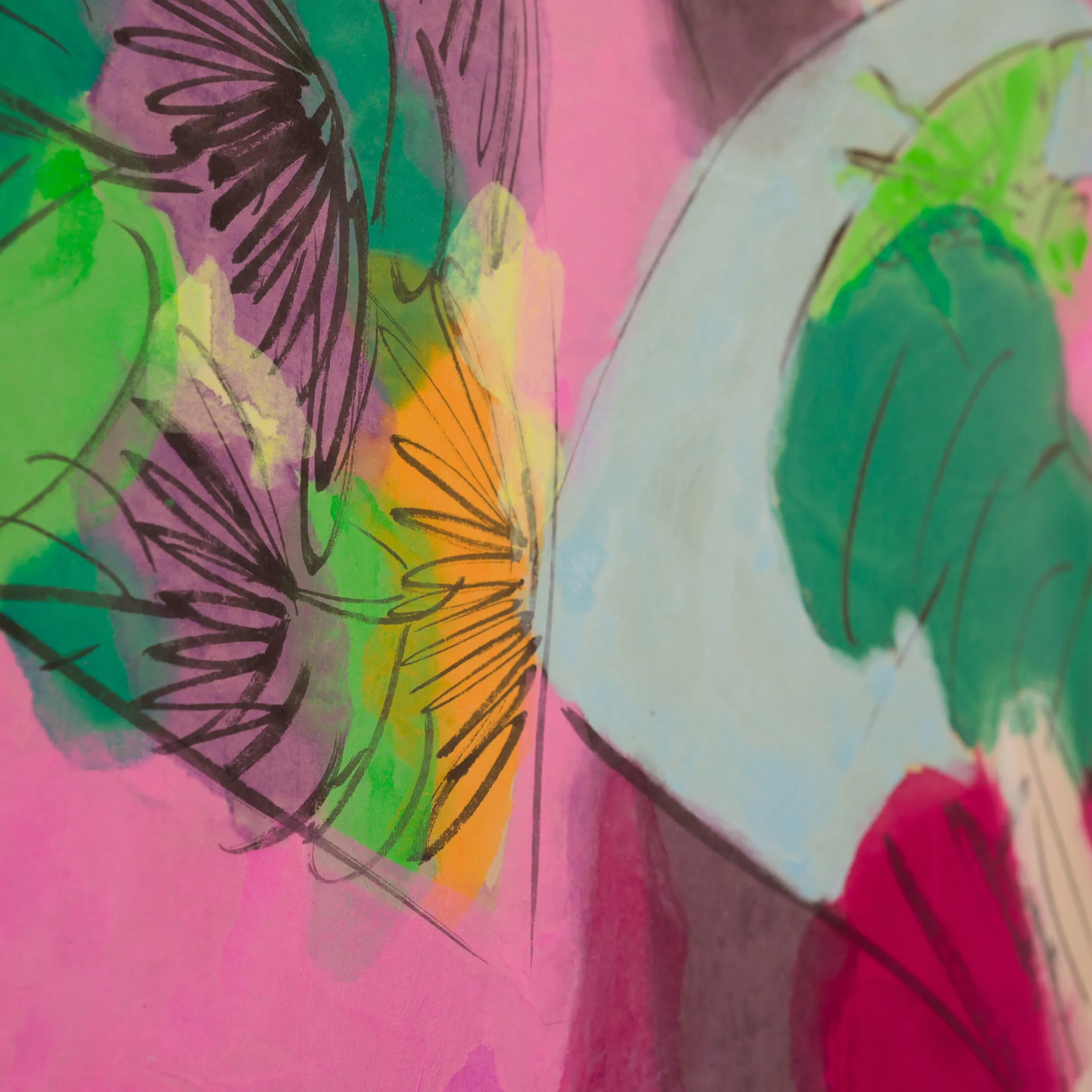
Two Women With Fans
Walasse Ting
Artist's stamp upper left.
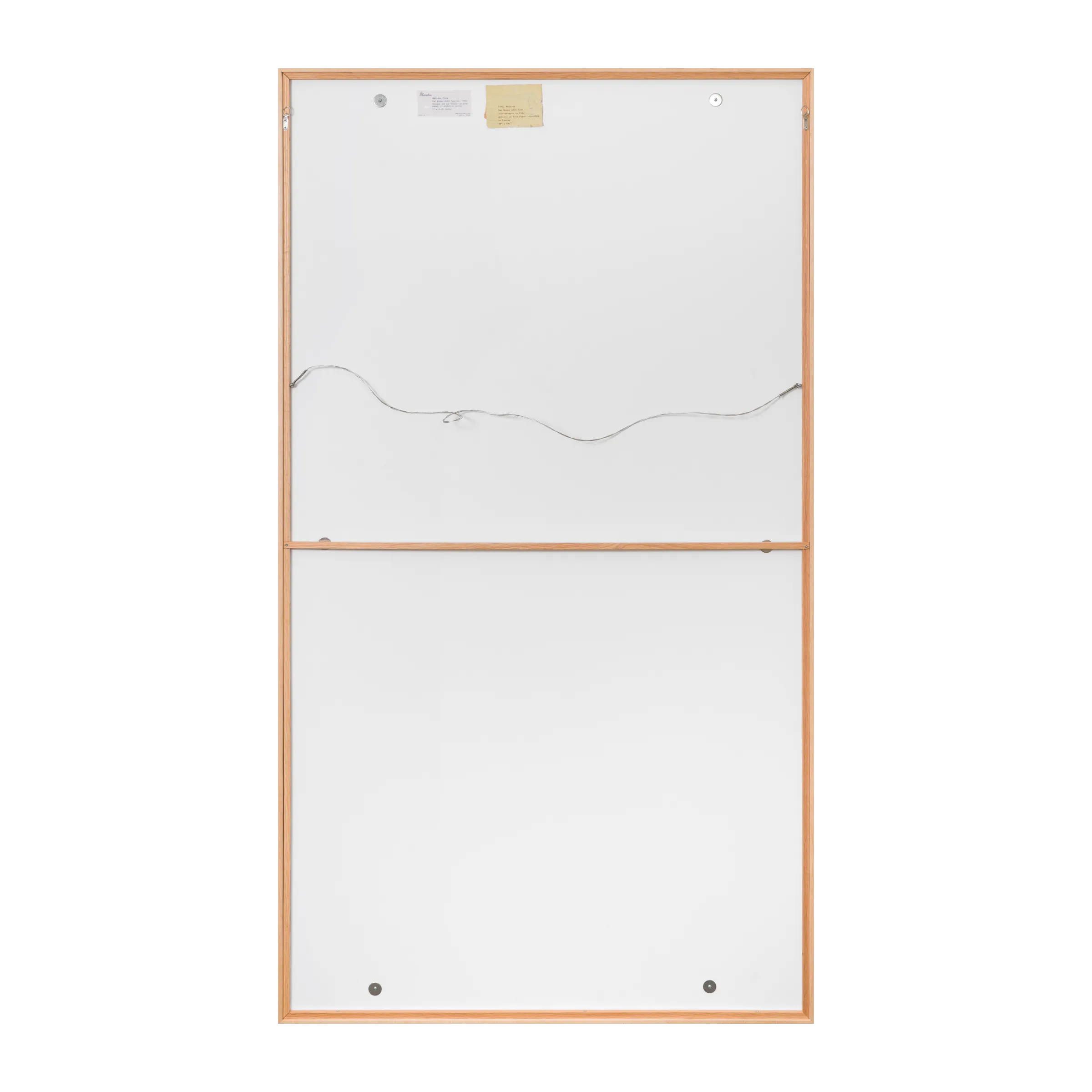
Custom framed in solid maple, float-mounted on Gatorfoam, with glazing (Optium museum acrylic).
Arij Gasiunasen Fine Art, Toronto
Private Collection, Ontario, Canada
Publications
Walasse Ting: Rice Paper Painting/Peinture sur papier de riz, Yves Rivière, 1984.
Overall very good and stable condition. Some errant marks in lower right quadrant. No evidence of restoration. Not examined under UV light.


Walasse Ting
Born Ding Xiongquan in Wuxi, China in 1928, Walasse Ting was a visual artist and poet known for his colorful paintings that often depicted the sensuality of women, juxtaposed with animal companions such as cats, birds, and insects.
After growing up in Shanghai and Hong Kong, Ting left for Paris in 1952 and never looked back. There, he associated with artists such as Karel Appel, Asger Jorn, and Pierre Alechinsky, all of whom were members of the avant-garde group CoBrA. A hallmark of the CoBrA artists was the colorful and expressive imagery, which Ting deftly blended with elements of his native Chinese culture.
In 1959, he moved to New York, which would serve as Ting's primary home for the rest of his life. In the 1960s, he met and married his wife Nathalie, and the couple eventually welcomed a daughter and a son, Mia and Jesse.
For the next three decades, Ting would paint, exhibit, and travel extensively. He was awarded a Guggenheim Fellowship for drawing in 1970.
In addition to his art practice, he continued to write and practice poetry. He is the author of 13 books, including All in my Head and One Cent Life - a portfolio of 62 original lithographs by 28 artists, including Andy Warhol, Roy Lichtenstein, Kiki Kogelnik, Tom Wesselmann, James Rosenquist, Asger Jorn, Pierre Alechinsky, Karel Appel, Claes Oldenburg, Joan Mitchell, Robert Rauschenberg, and Sam Francis.
After the death of his wife in 1986, he took his children and spent several months living and working in Amsterdam. Ting and his children were so taken with life in the Netherlands, that he would split time between Amsterdam and New York for the rest of his life.
While in the Netherlands in 2002, Ting suffered a massive brain hemorrhage, which effectively ended his painting career. He would eventually recover and move back to New York permanently, where he lived until his death on May 17, 2010.
A true "citizen of the world," Ting's work incorporated elements of many major artistic movements of the 20th century, from Matisse's brand of modernism, to Abstract Expressionism, Color Field, and even Pop Art. Accordingly, his legacy holds significance in American, European, and Asian post-war art history.
Ting's works are found in the permanent collections of many museums worldwide, including the Guggenheim Museum, Museum of Modern Art, Art Institute of Chicago, Tate Modern, Centre Pompidou, and the Hong Kong Museum of Art.
Various Sources
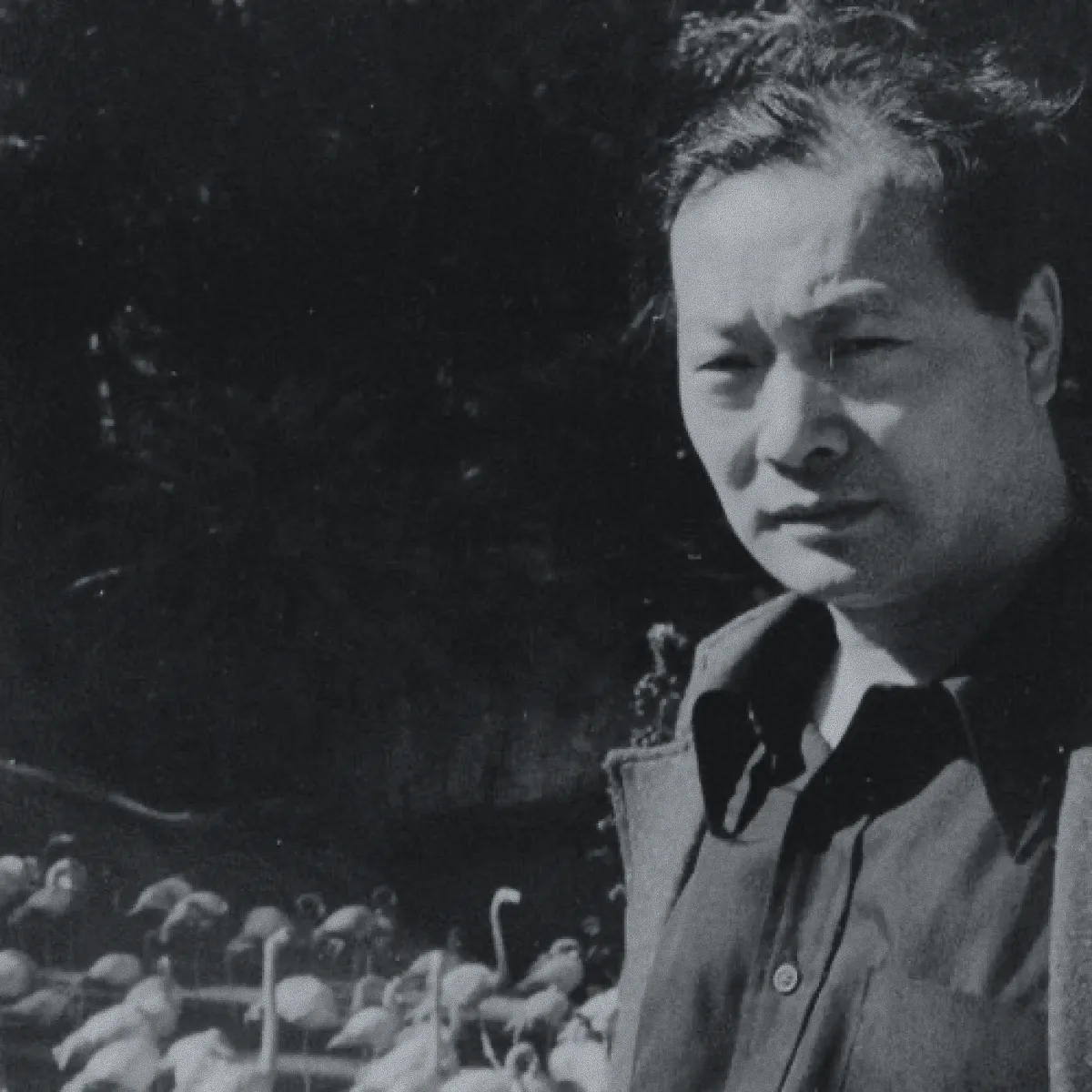
Born Ding Xiongquan in Wuxi, China in 1928, Walasse Ting was a visual artist and poet known for his colorful paintings that often depicted the sensuality of women, juxtaposed with animal companions such as cats, birds, and insects.
After growing up in Shanghai and Hong Kong, Ting left for Paris in 1952 and never looked back. There, he associated with artists such as Karel Appel, Asger Jorn, and Pierre Alechinsky, all of whom were members of the avant-garde group CoBrA. A hallmark of the CoBrA artists was the colorful and expressive imagery, which Ting deftly blended with elements of his native Chinese culture.
In 1959, he moved to New York, which would serve as Ting's primary home for the rest of his life. In the 1960s, he met and married his wife Nathalie, and the couple eventually welcomed a daughter and a son, Mia and Jesse.
For the next three decades, Ting would paint, exhibit, and travel extensively. He was awarded a Guggenheim Fellowship for drawing in 1970.
In addition to his art practice, he continued to write and practice poetry. He is the author of 13 books, including All in my Head and One Cent Life - a portfolio of 62 original lithographs by 28 artists, including Andy Warhol, Roy Lichtenstein, Kiki Kogelnik, Tom Wesselmann, James Rosenquist, Asger Jorn, Pierre Alechinsky, Karel Appel, Claes Oldenburg, Joan Mitchell, Robert Rauschenberg, and Sam Francis.
After the death of his wife in 1986, he took his children and spent several months living and working in Amsterdam. Ting and his children were so taken with life in the Netherlands, that he would split time between Amsterdam and New York for the rest of his life.
While in the Netherlands in 2002, Ting suffered a massive brain hemorrhage, which effectively ended his painting career. He would eventually recover and move back to New York permanently, where he lived until his death on May 17, 2010.
A true "citizen of the world," Ting's work incorporated elements of many major artistic movements of the 20th century, from Matisse's brand of modernism, to Abstract Expressionism, Color Field, and even Pop Art. Accordingly, his legacy holds significance in American, European, and Asian post-war art history.
Ting's works are found in the permanent collections of many museums worldwide, including the Guggenheim Museum, Museum of Modern Art, Art Institute of Chicago, Tate Modern, Centre Pompidou, and the Hong Kong Museum of Art.
Various Sources
Heading


