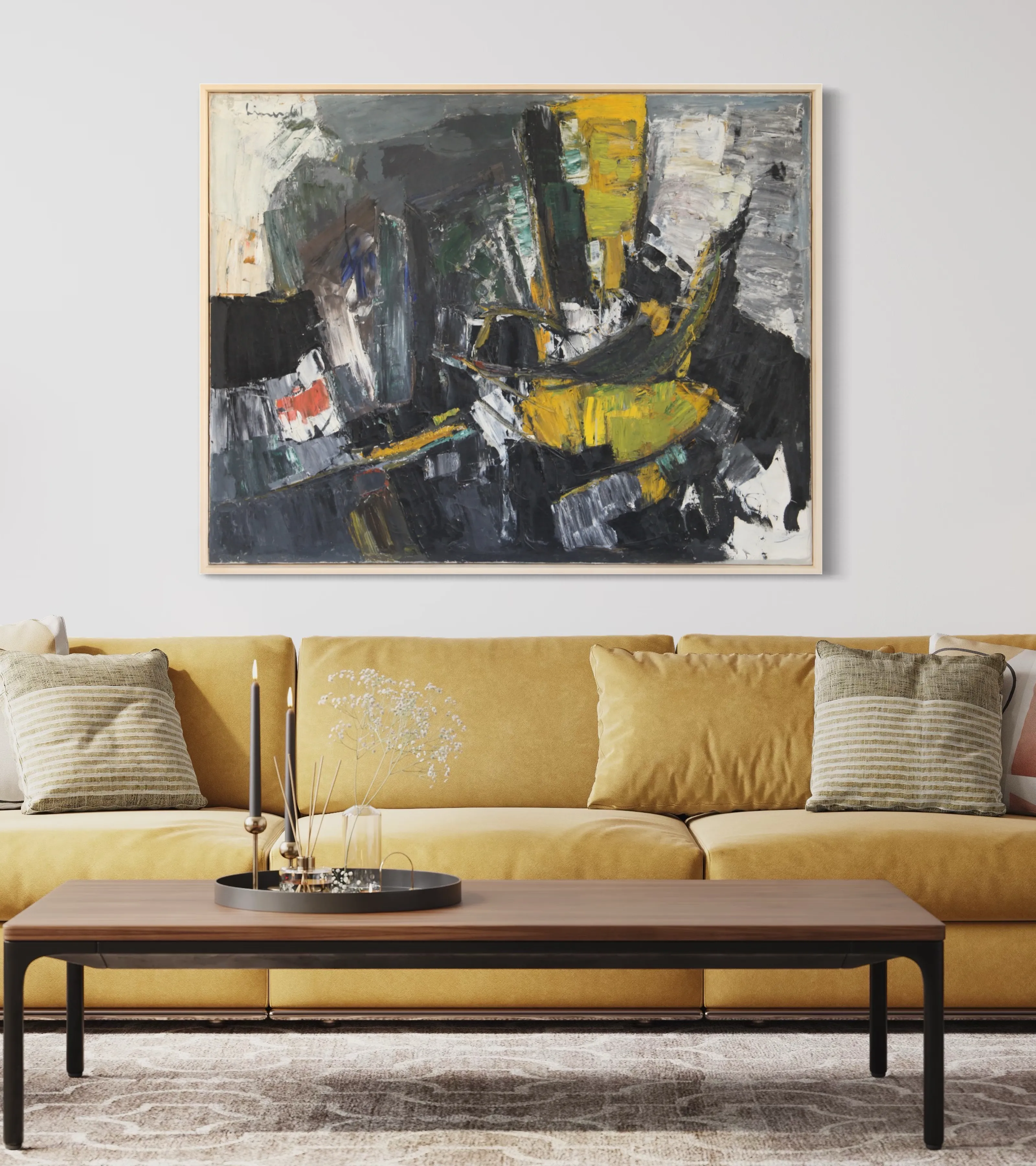
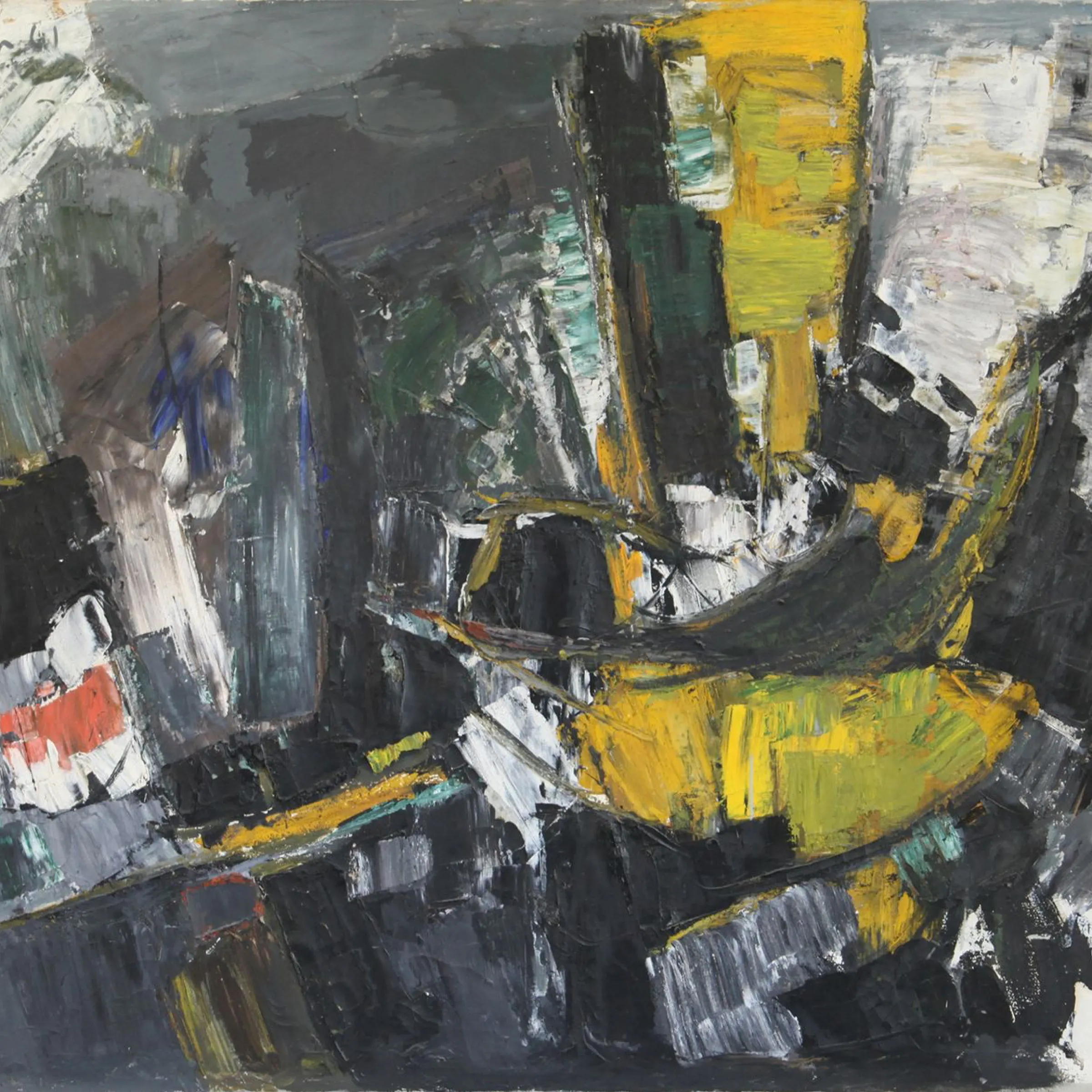
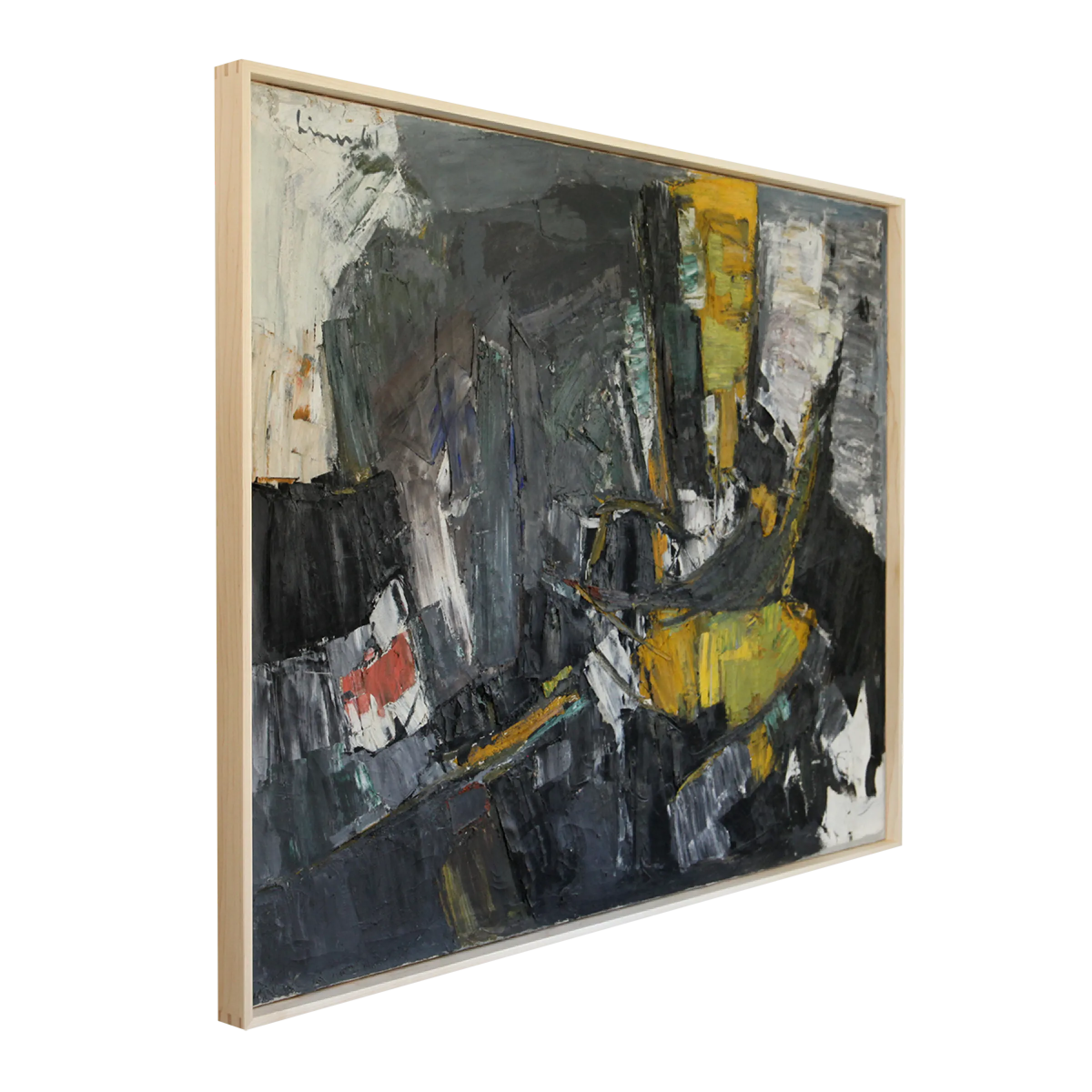
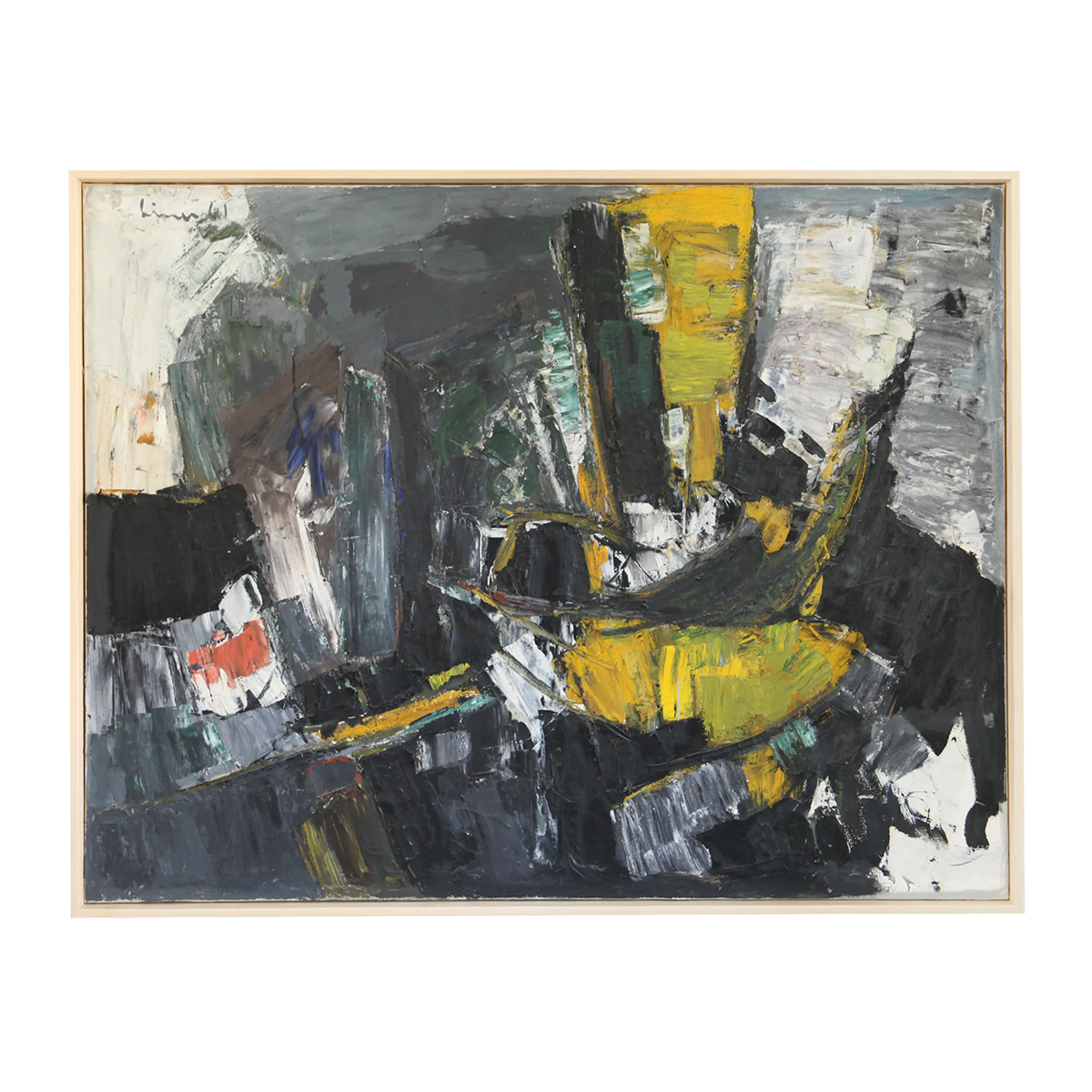
Untitled
Carl Walter Liner
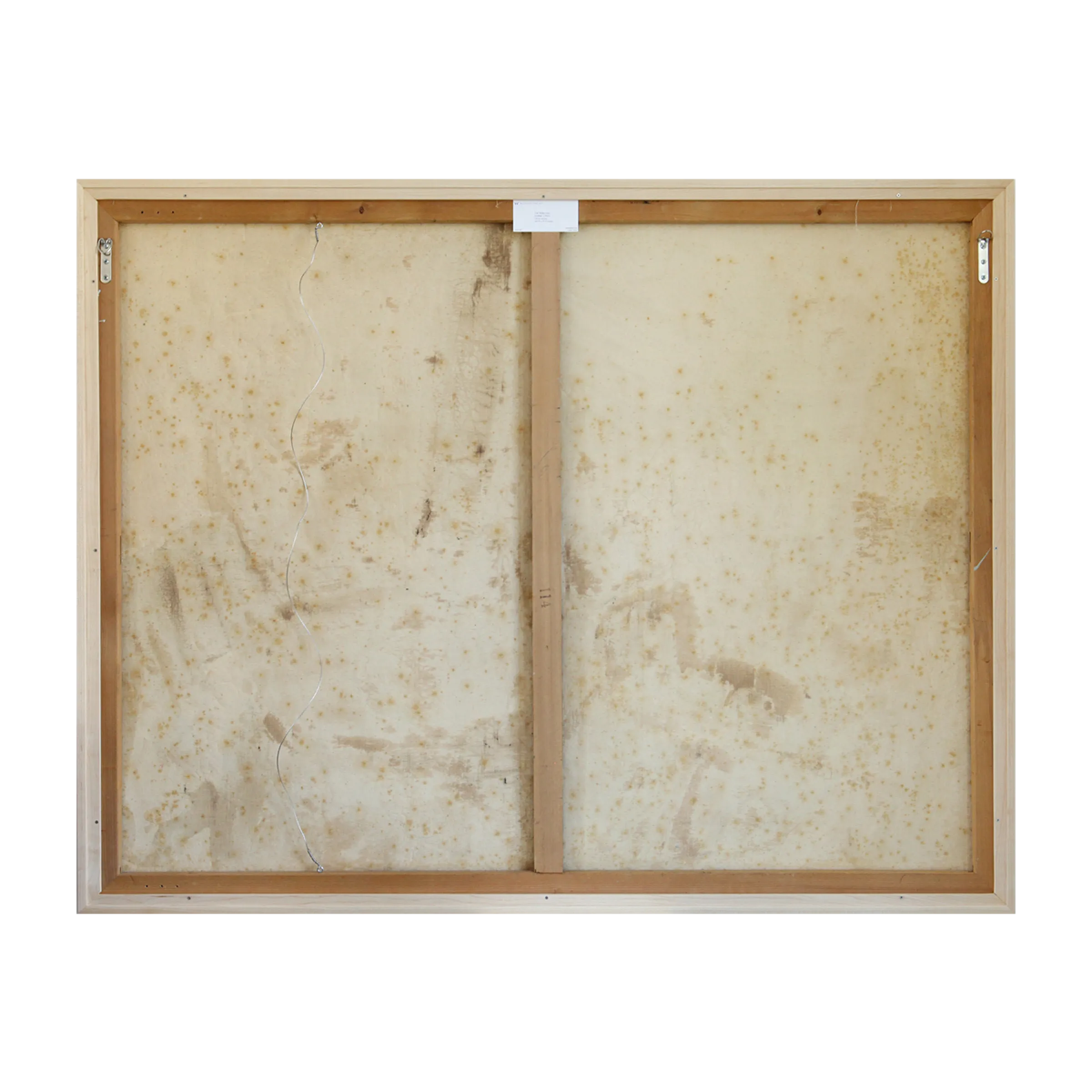
Signed and dated upper left; numbered on rear support.
Custom framed in a solid maple floater.
Private Collection, Switzerland
Overall good and stable condition. Surface dust. Mild-to-moderate craquelure scattered throughout, all of which appears completely stable. Possible impact crack in upper left quadrant. Small areas of loss noticeable upon close inspection, localized mostly to upper left and center left (underpaint conceals most of the flaking). Rubbing and wear along most edges. Canvas is unlined and not fully taut. No evidence of restoration. Not examined under UV light.


Carl Walter Liner
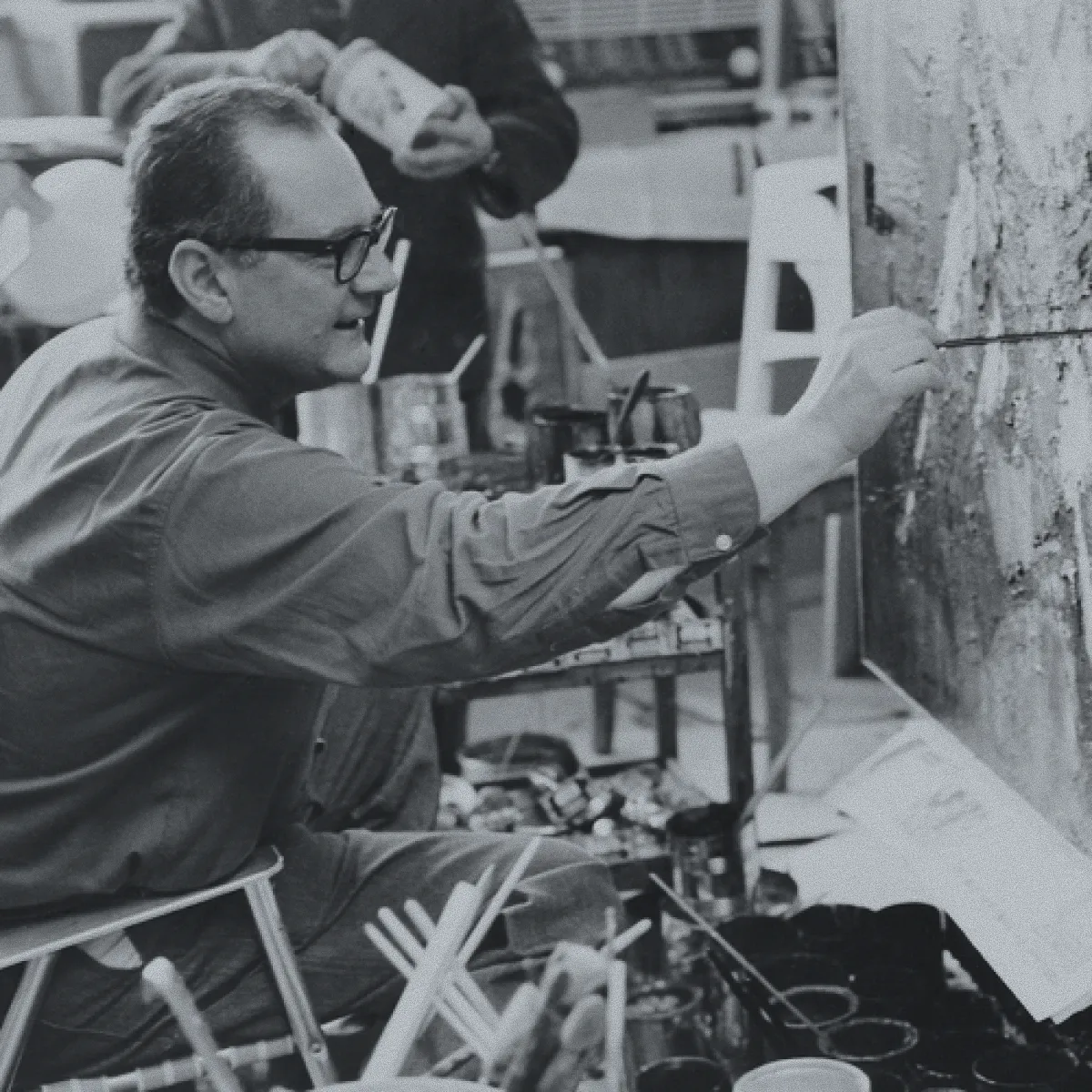
Carl Walter Liner was born in the Swiss canton of Appenzell, near the border with Liechtenstein, in 1914. The son of famed artist Carl August Liner, the younger Liner enjoyed more critical and commercial renown for his landscapes.
In 1938 at the age of 24, he undertook what would become the first of several residencies in Paris. This particular sojourn helped to establish the trajectory of his career, as Paris would provide the setting in which he became acquainted with early twentieth century masters Maurice de Vlaminck, Georges Braque, Ossip Zadkine, Gérard Schneider, and Erich Heckel. The stylistic and technical influence of his contemporaries is clearly evident in Liner’s work from this point forward.
Unfortunately, the dawn of the 1940s would bring about a number of challenges for Liner. With the outbreak of war, Liner was mobilized for the Swiss Border Guard, and returned home to Switzerland in 1939. He remained on active duty until 1945, only to lose his father the following year. The death of the elder Liner left a profound impact on his son, who eventually made his way back to Paris in 1947 and embarked upon what would become a very successful series of nudes.
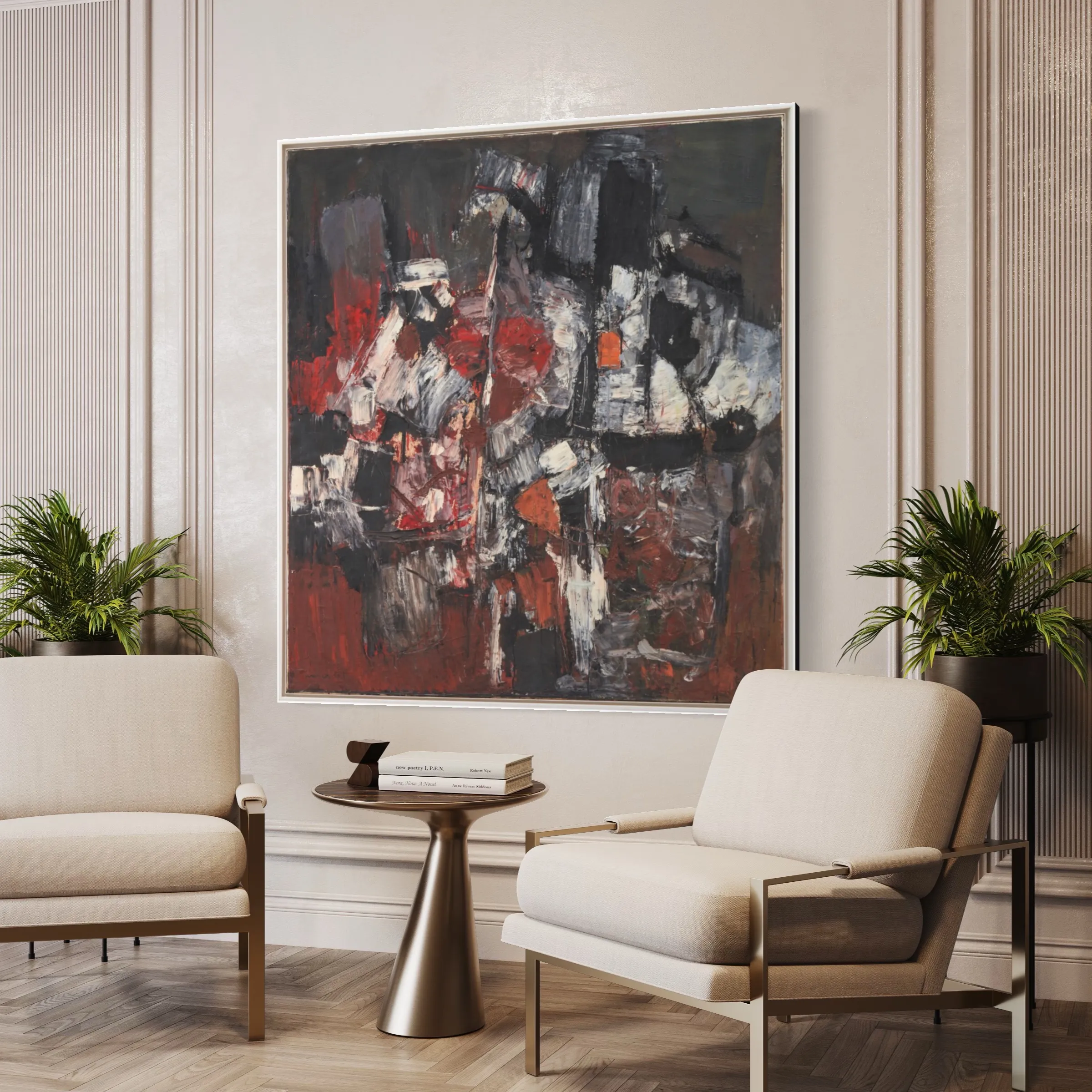
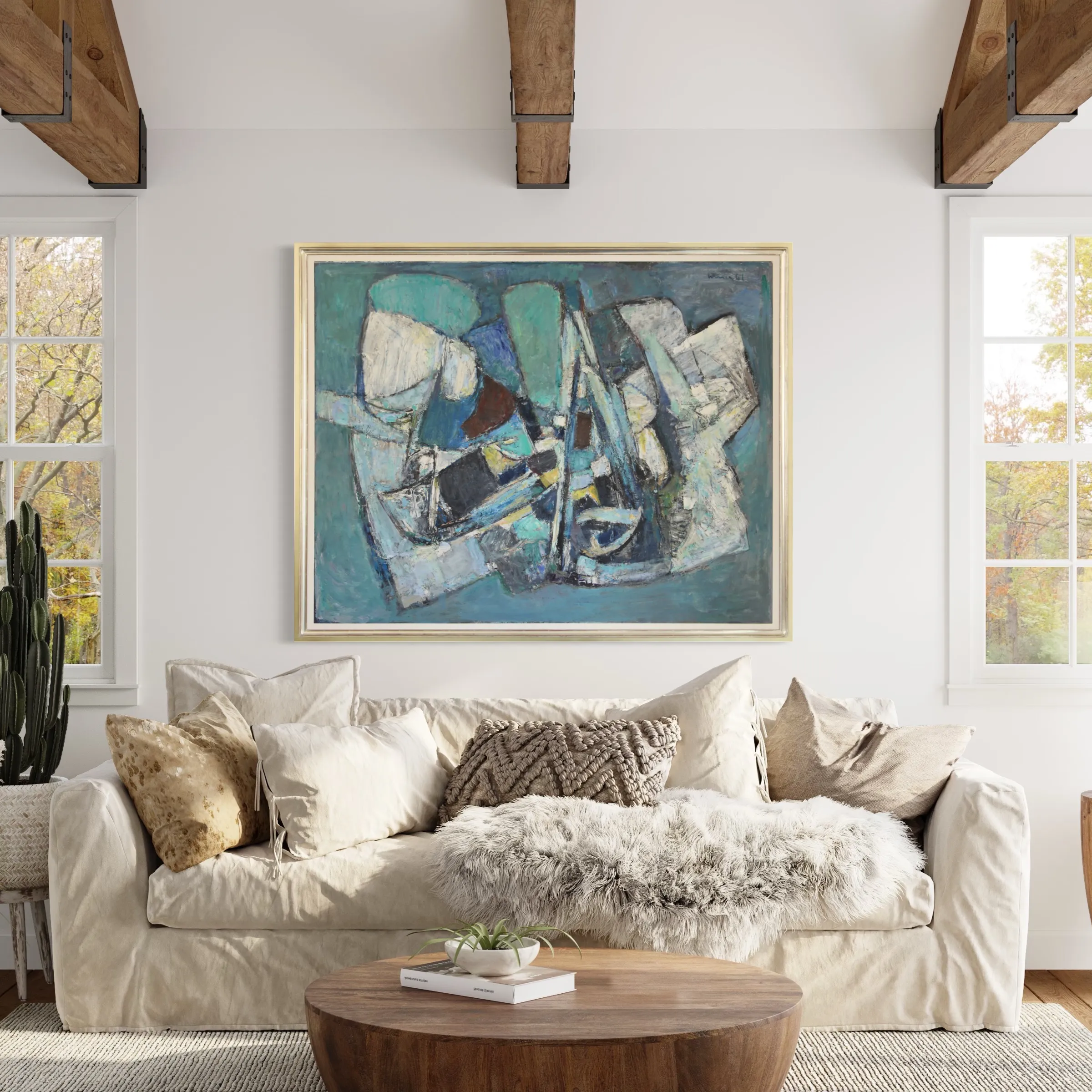
By his own admission, 1948 was a pivotal year in Liner’s career, as a particularly spiritual trip to Algeria fomented the emotions that led to the beginning of his practice with abstraction. Henceforth, Liner would vacillate between the figurative and abstract, creating parallel oeuvres. His abstraction from the 1950s and 60s mirrored much of the work coming out of America at the time, incorporating sweeping gestural movement and masterful color mixing.
Liner spent the next few decades traveling extensively, working in Switzerland, Italy, and France. A significant event occurred in 1958, when he purchased the Tour des Abbés in Fontvielle, near Arles. The medieval structure was in ruins, and Liner devoted substantial time and resources to restoring it before donating it to a local entity to steward his foundation.
Over the last decades of his life, Liner lived primarily in Switzerland, continuing to paint and exhibit frequently. His work was shown widely across Switzerland, France, Italy, Germany, and the United States.
Carl Walter Liner died in 1997 at the age of 83 in St. Gallen. His works are held in numerous private and institutional collections throughout Europe and North America.
Source: Michel Reymondin
Carl Walter Liner was born in the Swiss canton of Appenzell, near the border with Liechtenstein, in 1914. The son of famed artist Carl August Liner, the younger Liner enjoyed more critical and commercial renown for his landscapes.
In 1938 at the age of 24, he undertook what would become the first of several residencies in Paris. This particular sojourn helped to establish the trajectory of his career, as Paris would provide the setting in which he became acquainted with early twentieth century masters Maurice de Vlaminck, Georges Braque, Ossip Zadkine, Gérard Schneider, and Erich Heckel. The stylistic and technical influence of his contemporaries is clearly evident in Liner’s work from this point forward.
Unfortunately, the dawn of the 1940s would bring about a number of challenges for Liner. With the outbreak of war, Liner was mobilized for the Swiss Border Guard, and returned home to Switzerland in 1939. He remained on active duty until 1945, only to lose his father the following year. The death of the elder Liner left a profound impact on his son, who eventually made his way back to Paris in 1947 and embarked upon what would become a very successful series of nudes.
By his own admission, 1948 was a pivotal year in Liner’s career, as a particularly spiritual trip to Algeria fomented the emotions that led to the beginning of his practice with abstraction. Henceforth, Liner would vacillate between the figurative and abstract, creating parallel oeuvres. His abstraction from the 1950s and 60s mirrored much of the work coming out of America at the time, incorporating sweeping gestural movement and masterful color mixing.
Liner spent the next few decades traveling extensively, working in Switzerland, Italy, and France. A significant event occurred in 1958, when he purchased the Tour des Abbés in Fontvielle, near Arles. The medieval structure was in ruins, and Liner devoted substantial time and resources to restoring it before donating it to a local entity to steward his foundation.
Over the last decades of his life, Liner lived primarily in Switzerland, continuing to paint and exhibit frequently. His work was shown widely across Switzerland, France, Italy, Germany, and the United States.
Carl Walter Liner died in 1997 at the age of 83 in St. Gallen. His works are held in numerous private and institutional collections throughout Europe and North America.
Source: Michel Reymondin
Heading


